There are a lot of ways to get to Mongolia, and not a lot of them make sense. If you’re coming from the US, the easiest way is to fly to a hub like Seoul or Beijing and hop to Ulaanbaatar from there. But that could set you back $800 each way. If you’re from Europe and you’re name isn’t Marco Polo, you can easily get there by flying direct from Frankfurt. But where’s the adventure in saying you flew to the steppes on a direct flight on Lufthansa? Snore.
The way I opted for, the way that mixed bang for my buck, adventure, and absolute ear to ear grinning, was the_____BLLLLLLRRRRRRRR
…..
*BEEEEEEEEEEEEEEEP*
We interrupt this program with an important announcement.
I’m working on a project that makes researching travel easier and more personalized to what you ACTUALLY want to do on a trip. No more Top 10 Lists, no more doom scrolling TikTok and Instagram, and no more being a tourist.
I’m creating something that will turn everyone into a bonafide traveler making genuine human connections and worthwhile memories along the way.
But I need your help.
To get an idea of use cases, pain points, and the scope of this project, I’m running a survey to figure out how best to create this solution.
Click here to fill out my Google Form survey and help make travel more personal
I can’t do it without you! The future of meaningful travel is in your hands! Click above to fill in the survey and help out!
The best way in my seasoned experience to get to Mongolia is…TAKE THE TRAIN!!!
Yes, take the midnight train to Ulaanbaatar. It may sound crazy, but it is possible. After all, the Soviets connected Ulaanbaatar to the West via the Transiberian long ago, and later the city was connected to Beijing. But since COVID, the train hasn’t been running all that reliably, and to be honest finding information was an absolute pain in the bahooky.
This leg of the journey began in hot, humid, sticky, smoggy, insert uncomfortable adjective here, Beijing. With what must have been 98F/36C weather and high humidity, we unstuck ourselves from our beds to venture out for a pre-train hearty meal. All we found was a local restaurant serving millet gruel with donuts. But with our tummies full, we were ready for the first leg of the journey: a high speed train to Hohhot.
For $30, you can take a two hour highspeed train from Beijingbei to Huhehaotedong (Hohhot East). I bought all of our tickets through Trip.com for this leg of the trip, not because I necessarily need peace of mind but because the Hohhot-Erlian leg of the trip books up FAST. But getting to Hohhot is not especially challenging, and you could likely show up to the station to buy a ticket day of, as trains tend to run every hour in the morning.
Once you get to Hohhot, I highly recommend using Trip.com to buy your next leg of the journey. Erlian is a border town several miles from the Mongol border, so anyone going towards Mongolia will stop here. It’s a long train, but it fills up quick, and unless you want to sit in the cattle car, book those tickets ASAP. Train tickets in China are made available thirty days prior to the departure date, so Trip.com will buy your tickets as soon as they’re available. Even though I booked in advance, we were only able to get 2nd class tickets.
If you travel like us, you’ll arrive in Hohhot at around 10AM and have until 10PM to wander around the Inner Mongolian town. Hohhot is a rapidly expanding city of about 3 million, so this is a unique opportunity to visit a Chinese frontier city on the up and up. And it is weird. We dropped our bags off at a coffee shop at the station and took the impressively modern metro into the city, where we walked down gigantic promenades of empty streets.
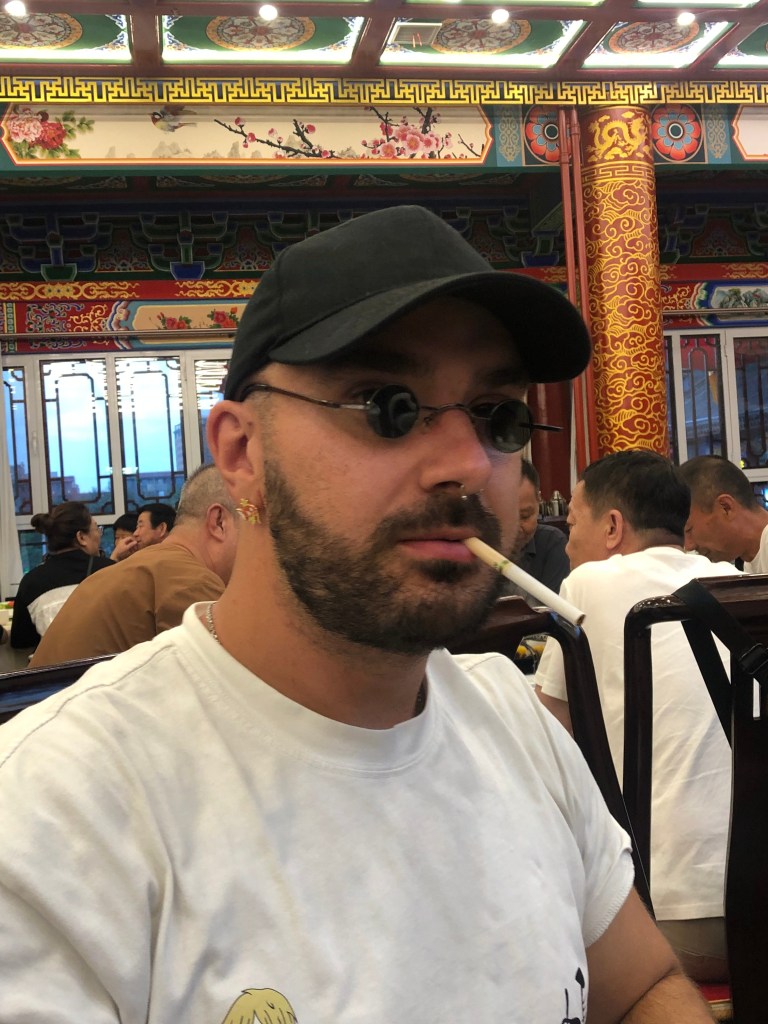
As a frontier town, Hohhot boasts a wide array of cultures. In the main downtown area, you can find mosques and the Muslim town butting up against Tibetan Buddhist Temples and a gigantic bustling street market. Like everywhere in China, it’s almost impossible to find bad food. We dined in a Muslim restaurant on huge bowls of lamb-rice pilov, fried bread and lamb, and foot long noodles. Like everywhere in China as well, everyone was exceptionally nice. We even picked up our own stalkers in the street market, a boy and girl who followed us into every shop and restaurant for over three hours. It began to rain as we wandered through the streets, so we stopped in to a smoky bar run by a geriatric man to smoke cigarettes and drink horse milk vodka. Our stalkers waited for us in the rain outside.
Trying to escape, we ran into a Tibetan Buddhist temple with an entrance fee. Finally on our own, we were able to enjoy the splendor of these gigantic and absolutely deserted temples. With more rain, we continued to enjoy the serenity of not being hastled by children, and watched the monks perform their ceremonies while rain pattered against the roof tiles.
With my incredible track record for finding restaurants, I stumbled in to a dinner theater where we were the only Western guests, and thus received the Marco Polo royal treatment. The dancers and singers seemed to perform only for us, coming to our table afterwards for photos. The restaurant brought us beers and roasted lamb and gigantic dumplins, and locals told us which delicacies we had to try before leaving. We had received the movie star treatment, and there was a moment where the three of us looked at eachother and said “why not? Why not stay here for the rest of our lives?” We had tasted the true potential of what life could be in Hohhot, China.
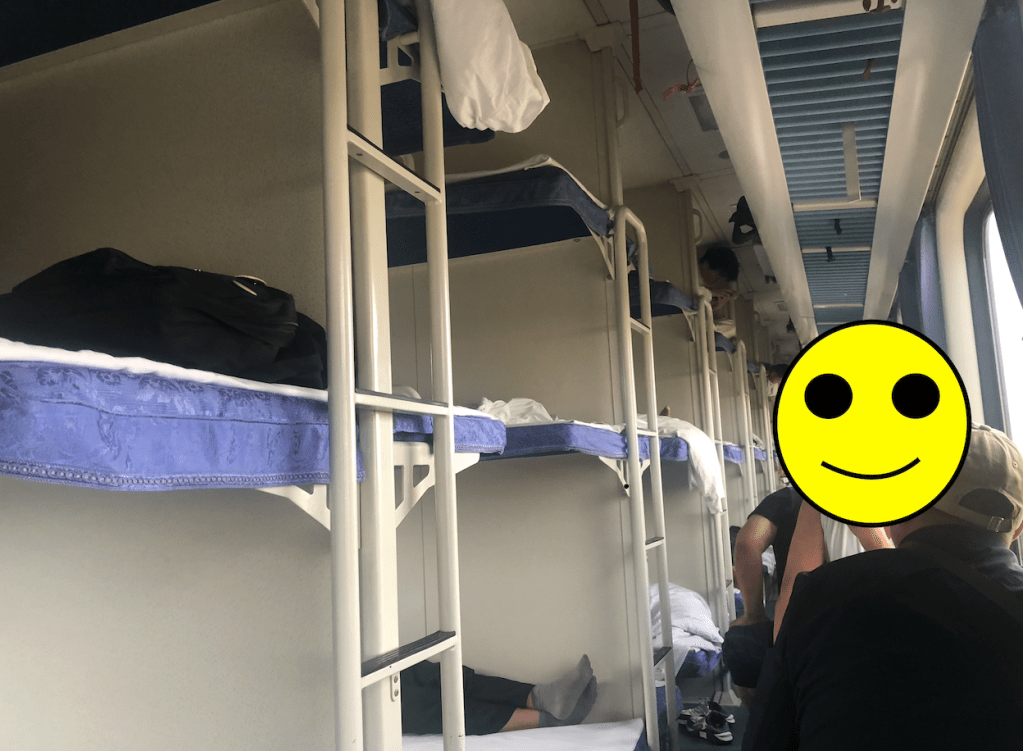
It was time to go back to reality, leave our stalkers and admirers in Hohhot and dive into the steppes of Mongolia. We boarded a 10:30PM sleeper train to Erlian, an 8 hour journey in second class on triple bunk beds with a bajillion people. Sounds rough right? Incorrect. It was airconditioned, spotlessly clean, and only cost about $6. We passed out and awoke to plains of endless grassy hills. We were nearing the border.
We arrived in Erlian at 6:30, and immediately found a driver who offered to take us across the border to Zamiin-Uud where we would then take another sleeper train to Ulaanbaatar. The border crossing was remarkably quick, even with the Naadam Holiday approaching, and by 8 AM we were in Zamiin-Uud with absolutely nothing to do. We had to kill time until our continuing night train at 6:30PM, and killed time by going into every (three) coffee shop, every restaurant (four) and each kiosk (2) in Zamiin-Uud. We got sim-cards, a bunch of Mongolian Tögrök with Ghenkhis Khan’s face on it, and sat in for the long-haul. The rain had followed us to Mongolia, so we had nothing to do but wait.
This is a more challenging journey I hope to be helpful on. It took me forever to find a way to book seats for this train. I’ve learned you can go and buy them day of, but I didn’t want to risk that with the upcoming holiday in Mongolia. The national website is down, so the only place I was able to find tickets was at a place called Tapa Trip. It may seem sketchy, and they may send you a ticket that makes no sense, but for another $30 we had first class sleeper seats on the long overnighter to Ulaanbaatar.
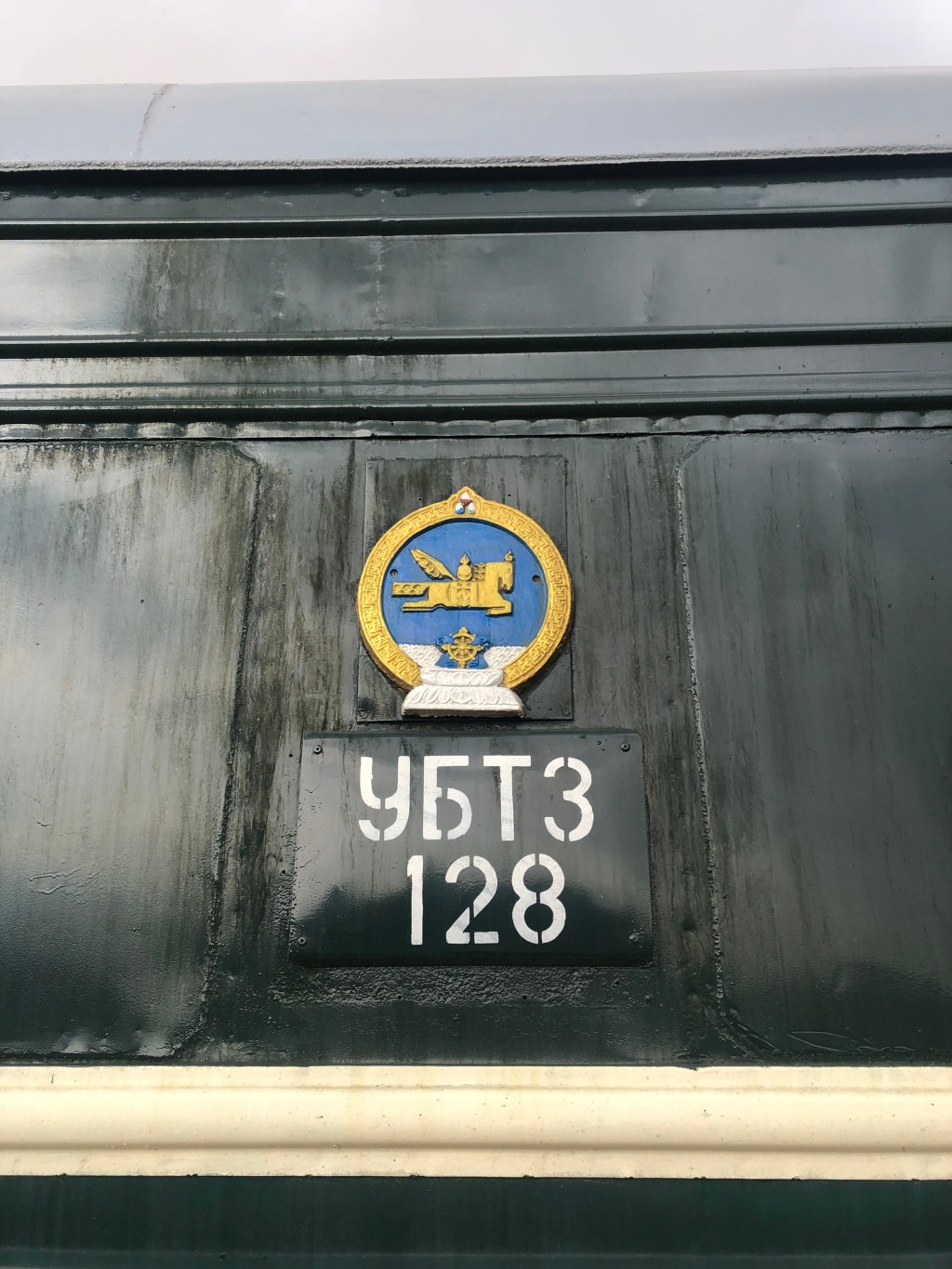
And yes, the first class tickets are worth it. We walked through the triple decker sleeper class which was nothing like it’s Chinese counterpart, and were grateful for the extra money we spent on our cozy sleepers. The train runs like an old Soviet train, and probably hasn’t been updated since the 90’s either. Samovars and dining carts with drunk Mongolians eating dried meat and noodles, and some Mongolian friends we had made while waiting for the train in Zamiin-Uud. I was worried there would be no train, that our tickets wouldn’t work, or something would go wrong on this massive three legged journey. But everything was perfect. In roughly fifteen hours we would arrive in Ulaanbaatar, ready for Naadam and all the shenanigans that would come with it, full in our souls from amazing trains and a layover in Hohhot.


Leave a comment