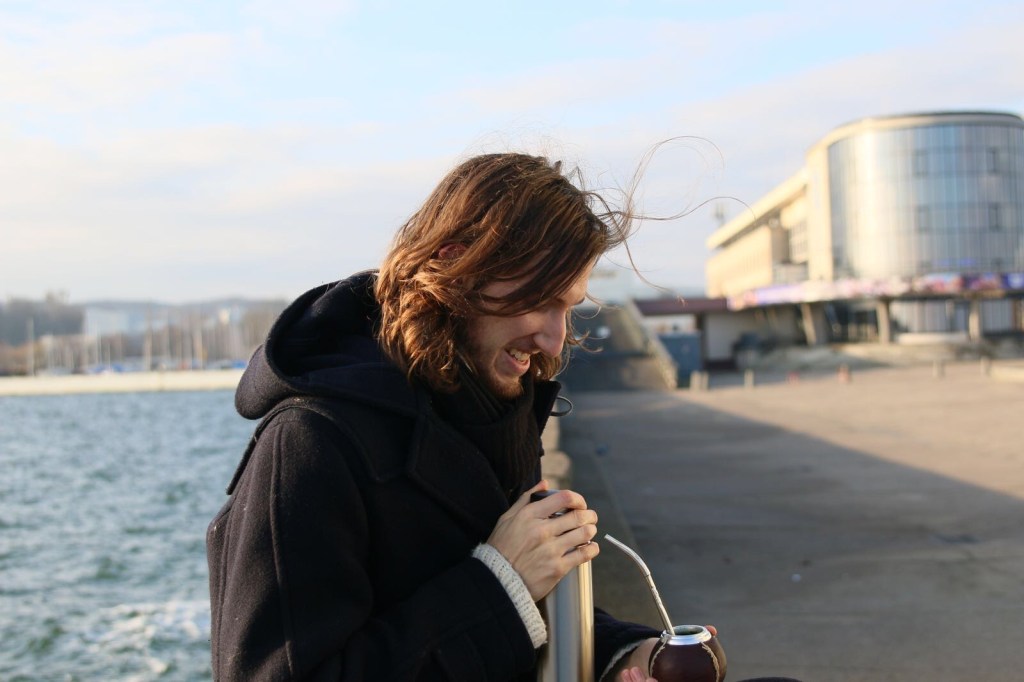
I like to drink and occasionally smoke from time to time: but I can kick these poor habits quite easily if needed. There is, however, one addiction I can not and will not kick: the bitter yerba mate that has filled my veins continually for the past 10 years. Just writing about it now makes me crave its warm, filthy embrace.
Nothing else quite strokes my energy like the sweet herb. It’s kept me awake through high school and college and continues to get me through working an 8-4 job. It’s kept me from getting jittery as a trust fund frat baby on Wall Street, and beyond that has served as a cohesive social tool to connect with people — perhaps even stronger than the bond created by alcohol. I remember trying it for the first time as a boy and hating its overwhelming bitter flavor. It took me to go to Argentina at 15 to fall in love with mate.
I spent a month working in organic farms up in the northern state of Corrientes, which is one of the places where mate originates and is drunk at all hours of the day. The head of the farm would give us one 15 minute break for a mate before lunch. Not long enough for these working-class Argentines. But we’d always push his boundaries, staying and passing mate and sharing cookies for upwards of 45 minutes, occasionally with him, smiling a smile flaked with cookie crumbs in between crooked teeth.
When he would leave the farm to go into town, we would immediately sneak off and have a mate while he was gone: sometimes for two hours just sitting, sipping, making fun of each other, and gossiping. I was the only big tall gringo boy working with a group of short middle-aged indigenous women. I was always the brunt of their jokes, but as long as mate was being passed around we were as good as family.
Mate has always come up with Uruguayan and Argentine travelers. I’ve passed mates with Uruguayans in Spain and Poland and regularly share one with incoming Argentine travelers in Denmark. It’s an instant way to bond, to share not only one’s saliva but one’s time and tales. I’m not sure how this pandemic will change how we drink mate but I’ve only shared mate once this year with someone — and even then it was a cautious occasion. Not being able to share a mate puts a whole generation of socializing Latinos at risk…but we’re likely all too addicted to care once we can meet and share a mate once more.
The Weekend Rambler
Always Authentic. Always on its own path.
-
-

I’ve spent a lot of time on trains or buses these past years, and several of those journeys have aligned with the momentous occasion of finishing a great book. The plot line has closure, the characters have long reached their apex and fulfilled their path, yet I am still on my journey. I always turn the last page excitedly and look up to celebrate, hoping that some onlooking stranger has seen me turn that final page and noticed my facial expression go from quizzical pensiveness to calm pleasure as the dots connect in my brain. I always hope that someone can be there to celebrate with me, to discuss what just transpired on the miracle hallucination created in my brain by these inkblot symbols on dried tree skins.
But no one cares, no one even looks up. They all peer down, with their noses in their own books or newsfeeds looking back at them with their own entertaining flashing lights. Sometimes I want to shake them and shout “DID YOU SEE ME?! I FINISHED MY BOOK!! DON’T YOU WANT TO ASK ME WHAT IT WAS ABOUT?! DON’T YOU WANT TO TALK ABOUT THE CHARACTER ARCH??” but I just sit quietly, holding the book for a few final moments before another journey enters into my life.
-
Last month I thought long and hard about what Advent Calendar to buy myself for this festive month. Advent calendars make the dark cold Danish winters just a bit more livable. In the spirit of Christmas, I decided I’d try giving an advent rather than receiving one. So every day leading up to the 25th, I’ll present a bite-sized travel story, ramble, or observation for the benefit of myself and my fellow ramblers. I hope you enjoy and share your Advent delights on your respective sites!
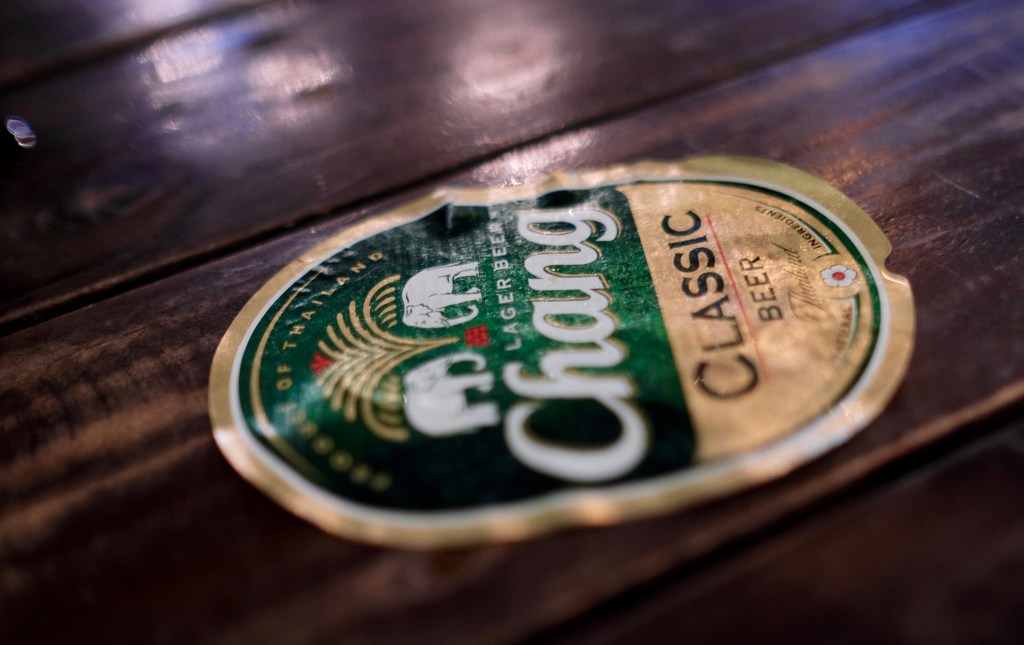
I have a love-hate with alcohol. For better or for worse, it has undoubtedly shaped many of my travel experiences throughout the years. It’s been the cause of many headaches and has helped facilitate or perhaps deepen some of my lowest pits in life. Yet, it has also stroked the felicity to some of my best memories, and it is inherently intertwined with my travel as a way to share, learn, and form a connection with your fellow traveler. I’ve been sober the entire month of November this year, so I feel able to reflect on the matter: what relationship should alcohol serve in my life moving forward?
I was properly drunk for the first time at 18. Deep in Bariloche, Argentina, trying to swing up to the level of a beautiful Dutch woman much older than me while simultaneously acting mature enough to hang out with backpackers much wiser than myself. We went out to a local bar with some fellow travelers and the owner of the hostel and her architect husband. The bar, a microbrewery, sold delicious craft beers for less than 10 pesos, which at the time equaled out to about $0.60 a pint. So for only a few dollars, I tried each beer they had on tap, each one tasting better than the last to my underaged North American mind. By 11 PM we were gone, mentally and physically, out in the streets and into an asado restaurant to order mountains of cheap juicy meat and drink as much red wine as we could fill in our nearly bursting stomachs. Hours were spent with these travelers, laughing, drinking, sharing stories, and ultimately creating a bond that would lead me to travel further with one of the backpackers to Chile. Alcohol served as the glue to make for ridiculous conversations that opened us up mentally, and let us engage in a way that I may not have been able to do with tea.
A year later, alcohol drove me to a dark bar on a rainy afternoon in the Faroe Islands. There I met Magnus, a beautiful bearded Icelandic chef visiting the islands for a surfing expedition. What else would a badass bearded Icelander be doing? That night we drew up drunken plans to rent a car and road trip the islands to loud Led Zeppelin albums, stopping in the remote bays to surf and take pictures of lambs navigating the mossy slopes. The next morning, alcohol goggles cleaned, we met sober to act on these plans and rent the car, and have five days navigating the surf of the Faroes.
I have countless tales of how alcohol has fostered beautiful travel memories and fueled the way for beautiful moments and stories to tell and remember. Yet it has also held a destructive power to create not only physical but mental pain. My most debilitating hangovers were in Belgium after long nights getting too merry with eager locals. My first few months in the cold, dark Danish winter saw me in the attic of my host parents’ house, drinking beers all night and writing poetry and songs into a journal, digging myself into a fit of winter depression. Now that I have spent a month sober in Danish winter, I struggle to find much else to do other than drink.
All of my greatest winter Danish memories are spent in candlelit bars or music venues, drinking tall dark beers and laughing with smokey bearded Danes. Without that social lubricant, I would be as I am now, staying up late at night rambling into a computer screen. So where does alcohol sit in my life now? There is no denying that it can be a powerful tool for connection, but it doesn’t have to be one of destruction as well. Perhaps I could have had all of these experiences had I been sober, and maybe they would have been even better. There’s a lot of sanity in living a little, but just to the point where it won’t take all the fun of living a tomorrow.
To be honest, I’m not sure what the answer is. What do you think? -
Essays and Observations on Danish Existence
— from an expat who knows nothing—

SONY DSC
There is something I must tell any and all individuals wishing to move to Denmark to sample the herring, hygge, and hangovers.
The weather will crush you.
But it is also something that will make you stronger. Living in Colorado most of my life made me accustomed to the challenges (if any) of living in 300 days of sunshine a year. Living in South Carolina and Hong Kong taught me the ability to live under any condition of humidity and heat imaginable. As an expat in Denmark, I have learned to survive five years in a dark, wet, and sparcely sunny country.
I was counting the number of days I’d worn short sleeves last July. On my vitamin D depleted fingers, I counted 5 days.
But all of this comes from too high of standards. I go into July expecting Italian heat, but Denmark just can’t do that. I’ve set my pedestal too high for the Danish weather, and I get disappointed by something that was never physically attainable.
But am I wrong to desire warm heat in the summer? No; but perhaps it is wrong for me to assume this divine gift from the Norse gods that rule this windy land. With time, I’ve come to appreciate the cold, the rain, and to a lesser degree the wind. Rather than have the rain inhibit me, I see myself as a tree or leaf that is simply a part of the rain as well.
Every now and then, I find that the rain allows me to calm down a bit and gives me an excuse to curl up with a book. In Colorado, you almost felt guilty for not taking advantage of the perfect weather. Here, we enjoy our 5 days of summer to the fullest by spending the entire day outside. The rain, if you allow it to, can be a powerful source of restoration for the mind.
Finding some way to appreciate it makes it all go down a little bit easier.

What have you learned as an expat?
-

Essays and Observations on Danish Existence
— from an expat who knows nothing—

Last weekend at a garden goulash party, I had the chance to sit down with one of my few Danish friends, who also happens to be my coworker (it can be difficult to make a Danish friend unless they’re forced to interact with you daily: so most of my Danish friends are colleagues, classmates, and former roommates).
Concerned by her somewhat distant composure, I asked in Danish, “are you doing alright?” because a party filled with drunken Romanians and Americans can be a bit jarring for some. She nodded, but I didn’t really trust her Danish stonefaced silence, so I followed up, “er du sikker?” — literally translating to “are you sure?”
“…Hvad?” She posited back to me. I repeated my little phrase, not receiving any more understanding, and switched back over to English. “Ahhh.” She said, now understanding.
“How would you say that in Danish?” I asked.
She thought, and after a moment said, “I don’t know…it’s stupid to even need to say that in the first place. We don’t really ever need to say that, we always just trust that the other person is telling us the truth the first time.”
This idea absolutely blew my North American happy-masked mind. The truth? From the start? How can that humanly be possible? In the US, it feels that one really needs to dig down into a conversation before actually getting to the emotional meat of the situation. Even in a call with my mother the other day, when she asked how I was I replied: “fine,” even though after 20 minutes into the conversation I revealed how tired I am at work and how tired the societal climate is making me.
So why don’t we just say what’s on our minds from the start? This topic has been on my mind for a good five years now, as my North American desire to hide the truth continually affects my relationships.
Or perhaps more directly, our ever-expanding egos.
The North American mind desires to have a presence, which is something most of the world does not desire to the same degree. In the US, we are told we can be astronauts or senators or actors when in cold reality only a good .01% of us will actually achieve those desires. To become part of that .01%, we’ll throw our life savings into an expensive degree or a shining white smile. Much of the rest of the world is comfortable with just having a house, a Netflix subscription, and a job to pay for these.
They strive for functionality.
I’m not saying it’s bad to dream big, I’m just saying it’s bad to pass through life only striving for superficial gains. Getting back to emotions, we North Americans don’t reveal our emotions right off the bat because we want to appear stronger, happier, smarter, and more composed than we actually are in reality. We are taught to suffer in silence rather than open up, to keep our true selves hidden so that our desired self can stay preserved on the surface like a calm pond.
Of course, I also think this has something to do with our past as a nation. In a country with so many nationalities and so many different cultural backgrounds all melting in the same hot pot, it’s a lot easier to smile and say “I’m doin’ good” than it is to tell the truth and scare away a someone you may need to depend on in the future. We’ve been taught for generations to just smile rather than show our true selves.
In an old European village, you’ve known everyone since you were born and will only ever know these people, so there is no reason to lie to them over something as trivial as “How are you?” There are more important things to attend to, and worrying about keeping up a manufactured appearance is certainly not one.
So regardless of our melting pot of beautiful teeth and high ambitions, let’s work to be a bit more upfront in the future, and prevent our friends from having to pry the juicy details out from us with stupid questions like “Are you sure?”

What’ve you learned as an expat?

