The Weekend Rambler

Always Authentic. Always on its own path.

  • Rain Over the Abode of Peace

    Brunei…have you heard of it? When I was telling people about my upcoming trip to Borneo, they would (even being Hong Kong locals) say, “umm…sorry but where’s that again?”

    “Borneo? The third largest island in the world? The one where David Attenborough makes movies about Orangutans and Proboscis Monkeys? The one with an incredibly old and diverse rainforest? No? Alright.”

    If people didn’t know where Borneo was, I certainly didn’t blame them for not knowing about Brunei.

    Let me tell ya. It’s the 32nd smallest country in the world, only about twice the size of Luxembourg, yet once ruled all of Borneo and parts of The Philippines until territorial squabbles and British colonialism shrunk it to its current day size. Even still,  Brunei has the third highest GDP (PPP) per capita in Asia and the fourth highest in the world. How? An extraordinary wealth of oil offshore. It’s also one of the most devout Muslim countries in Asia, still practicing Sharia law. I’ve always been fascinated by the little countries of the world. Andorra, Liechtenstein, San Marino…why do they exist and what are their people like? Brunei is no different, and I’ve been curious about the place for a while. Obviously, I worked tirelessly to find the best route to the Abode of Peace.


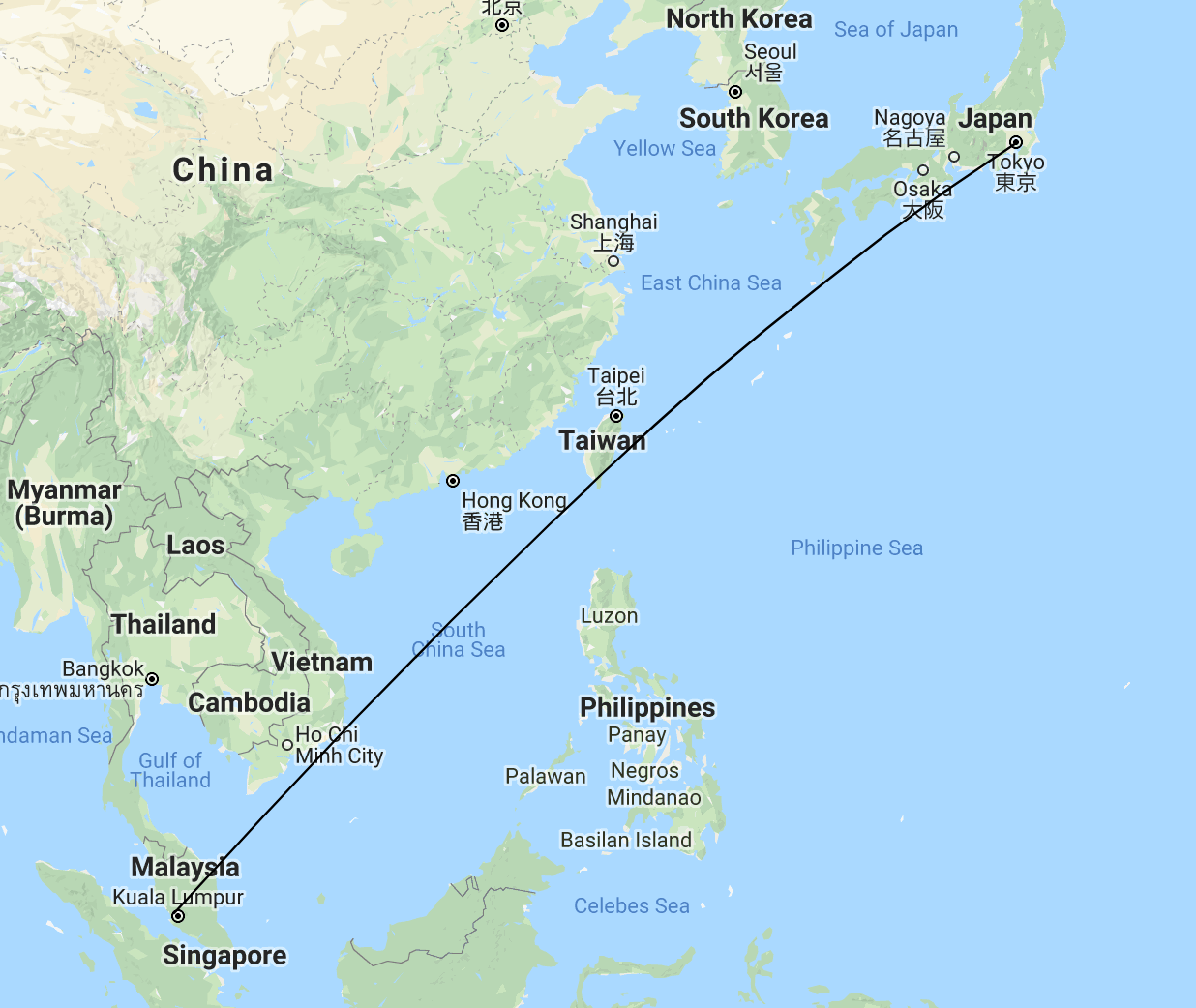
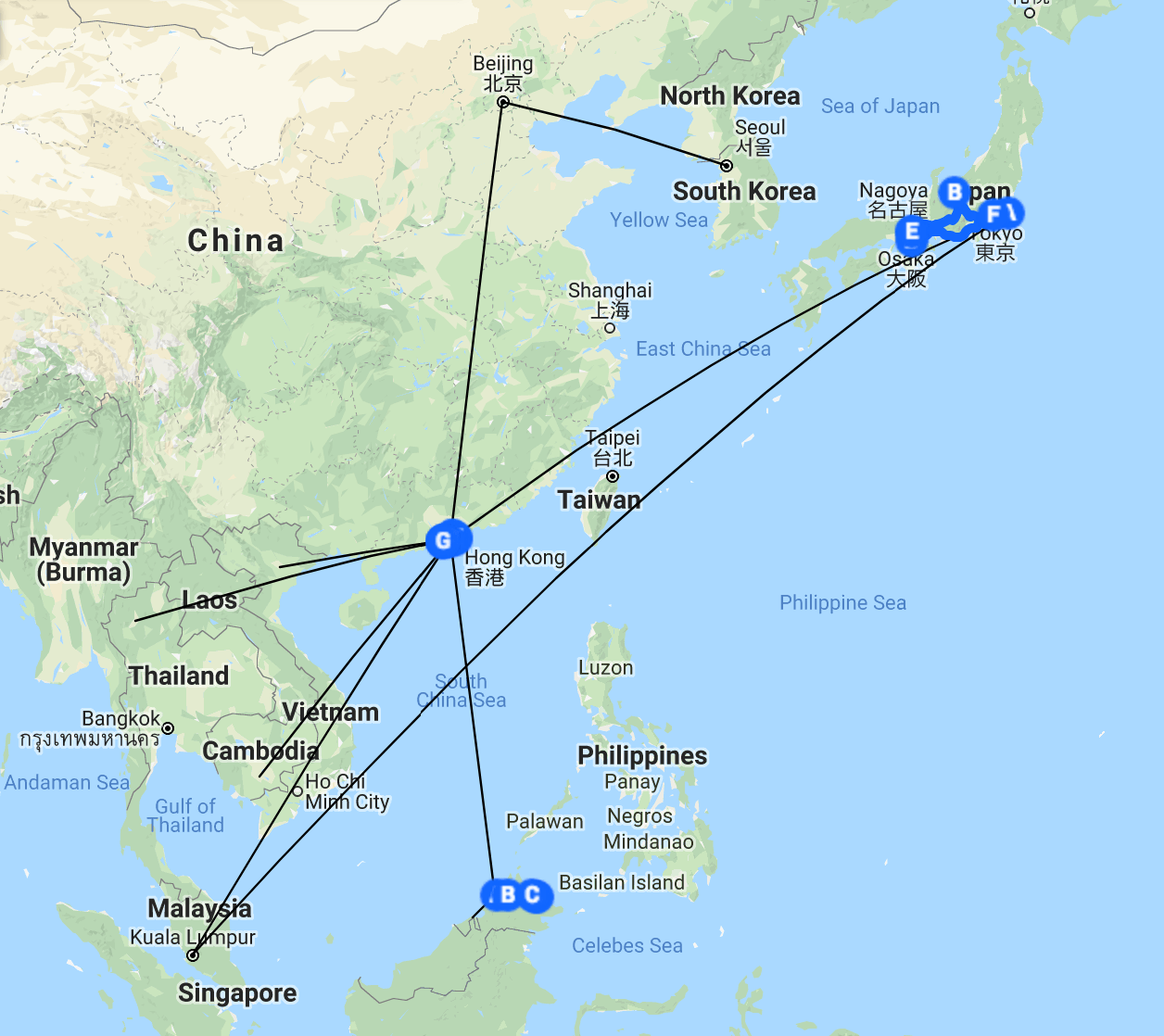
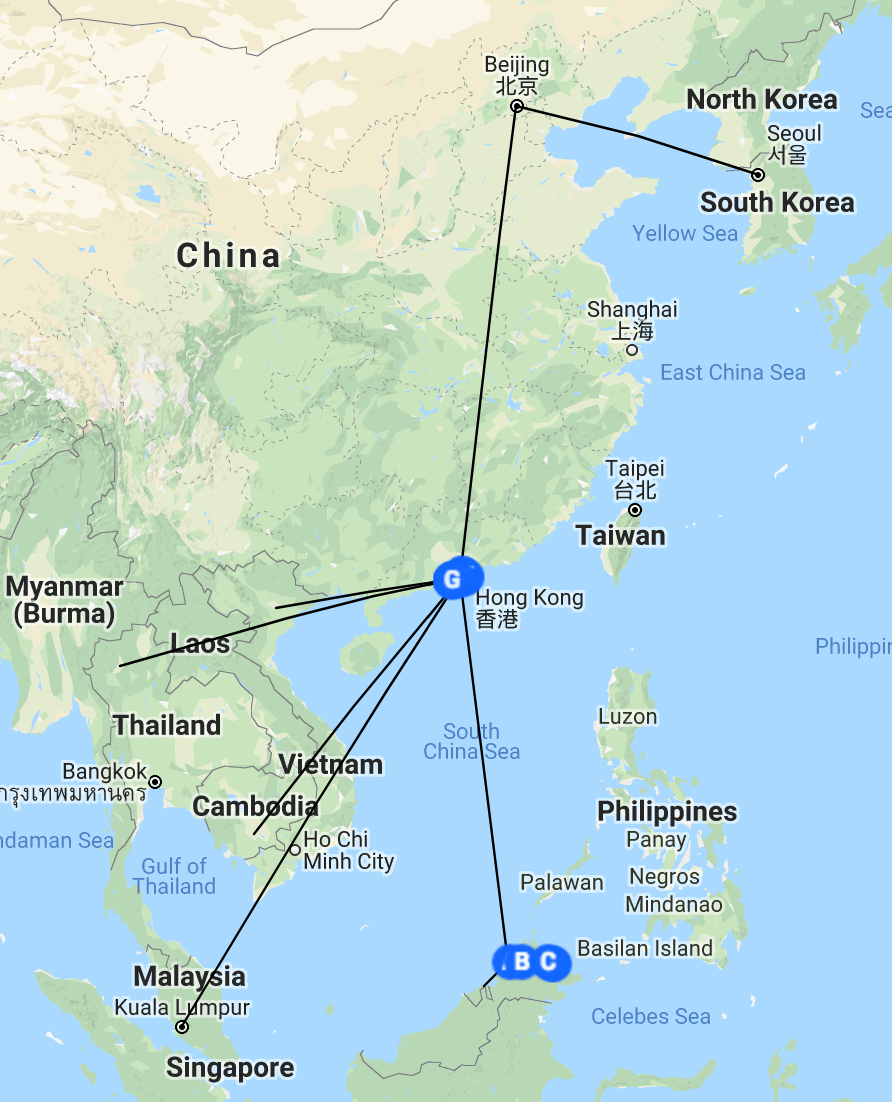
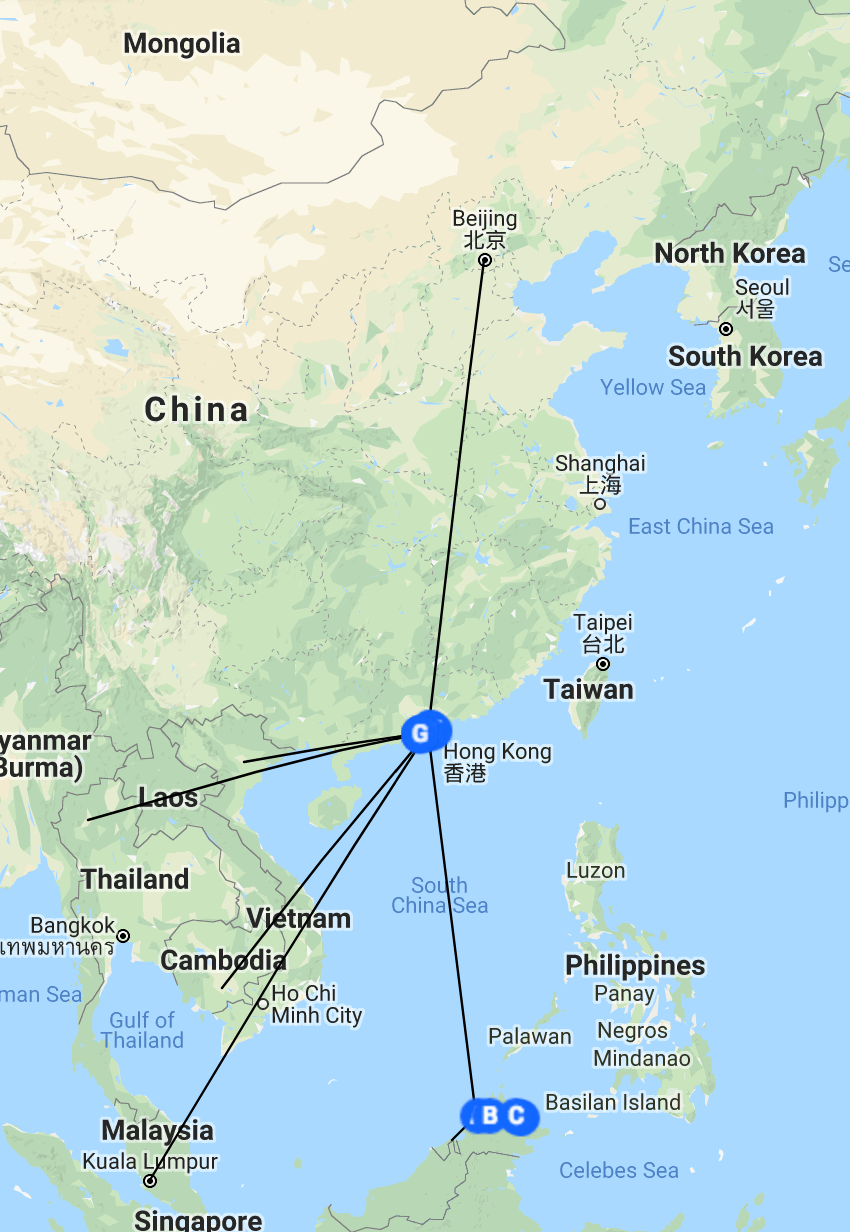
    The hardest part is finding an affordable means of getting to Brunei. From Hong-Kong, the cheapest and quickest way turned out to be flying Air Asia to Kota Kinabalu in the Malaysian state of Sabah (One may also fly direct to Brunei from Kuala Lumpur for a decent price).

    Screen Shot 2018-11-20 at 7.39.28 PM.png

    I arrived late, as I had lectures all day before my flight, and got to the city around 23:30. I instantly checked into Space Cap Hotel, which has the trekky capsule rooms I grew fond of on my trip to Kuala Lumpur. Loud disco music downstairs and a loud snorer below me kept me up until 3 am, and my alarm got me up promptly at 5:30 to catch my 7:00 flight with Royal Brunei.

    If you’re on a budget or have more time, which I wish I had, you can take an eight-hour bus from Kota Kinabalu or a ferry to Labuan, then a ferry to Brunei.

    DSCF2273.jpg

    My only hesitation pre-journey to Brunei was its extremely strict drug enforcement policy. If found with any illegal substance, the punishment is execution — no questions asked. The back of the immigration form read in bright red letters, “WARNING: Death to all drug traffickers under Brunei law.” I haven’t touched a drug worse than beer or cigarettes in a while, yet there was still this paranoid thought in my head that someone slipped a little baggy into my shoes while I slept (I dunno, I don’t know how smuggling works). I even feared that my malaria medicine would incur suspicion since I forgot my doctors signature in my dorm. My 6:00 am brain played the scene over and over again:

    “Sir, what are these pills?”

    “Doxycycline, for malaria prevention.”

    “Do you have proper documentation?”

    “I have a photo of the receipt for my prescription…that little curly ‘Q’ at the bottom is his signature…” and then I’m instantly carried off, beaten with a salty cane, and tied up to a mossy Mangrove where the Proboscis Monkeys incorporate me back into the planet.

    Yes, my 6:00 am mind is ridiculous. My malaria pills past inspection, and my shoes didn’t have any hidden baggies. Bruneian’s are some of the friendliest and most welcoming I’ve encountered in all my travels.

    And yes, Brunei has been one of the highlights of my entire time in Asia over these past four months.

    Screen Shot 2018-11-20 at 7.46.22 PM.png

    The flight only lasted about 40 minutes, which was just enough time to oogle out the window at the beautiful Bornean coast.

    IMG_6148.jpg

    I arrived early in the morning, still not quite hot enough to scorch but definitely hot enough to get my sweltering. I went and asked the tourists desk how to get downtown, and the woman pointed me to the bus stop. She noted that buses have no schedules, and will show up when they show up anytime between 6 am and 6 pm. Great.

    I sat, gradually getting hotter in the already 30 C morning heat until a bus showed up after a good twenty-minute wait. The bus is a lot like a Hong Kong light bus, more or less a minivan driven by a man who hasn’t slept in 48 hours, staying awake by sheer adrenaline. The attendant gave me a warm smile and “Selamat Pagi” (Good Morning) as I entered and the crazed driver shot out of the parking lot. The bus downtown cost B$1 (US$.60) and took a good twenty minutes through the outskirts of the capital, Bandar Seri Begawan (BSB). By the time we got downtown, the Bornean sky had opened up and poured down. People were running and hiding for cover, and I walked through the rain to a little shop to buy my favorite Teh Tarik (a bit like a chai) and some morning bread to enjoy with the rainstorm. The rain was a welcome relief to the constant sunshine we’d been experiencing in Hong-Kong.

    The rain continued between about 8:00 and 11:00, which gave me plenty of time to just sit and watch. I love a good rainy day.

    When the rain finally stopped, I learned that everything and anything in the country shuts down between 12 am and 2 pm on Fridays to allow for prayers. I shot up and tried to find some lunch, stumbling into a delicious local shop for some Nasi Lemak (fried chicken with rice, peanuts, sambal, and anchovies) before heading to Omar Ali Saifuddien Mosque, the main Mosque of downtown BSB.

    DSCF2242.jpg

    Clean and elegant, the Mosque acts as a symbol of the city. I don’t think they get many tourists here, so I drew more attention than usual taking photos around the Mosque at prayer time.

    I love listening to the call to prayer, and it’s always one of my favorite things about being in a Muslim country like Azerbaijan or Morocco. I appreciate the aesthetic of geometry in Islamic art, and a call to prayer ties both sight and sound together in the most harmonious way possible.

    As soon as the call to prayer sounded, every shop and building in the city shut down and a flood of people rushed to the Mosque. I walked around in a ghost-town capital. No shop with open doors, just some Korean tourists over there, a German couple there, and a man taking a selfie with me here. It was a surreal scene, to walk around a nearly empty capital. There’s nowhere else I can imagine being able to do such a thing in Asia. But a ghost-town does grow lonesome, and my tired soul just wanted a little siesta before taking on the night. I headed to Ae Backpacker’s Hostel for impeccably clean rooms and incredibly welcoming staff for a much-needed catnap.

    When I finally got up I headed to Jame’ Asr Hassanil Bolkiah Mosque, the largest in the country, for the sundown call to prayer.

    It doesn’t seem like they have too many tourists, and every local I’ve encountered up to this point has at least made eye contact with me and nodded or smiled with a “hello”. People often slow down their cars to wave at me, and some come up and shake my hand wishing me a good day. I can always appreciate a place that makes me feel welcome, and the strangers in Brunei have been some of the most welcoming I’ve experienced in my life.

    Alcohol is not allowed in Brunei, making my usual ‘go to the bar for a few’ plan impossible. So I adapted and went to the Gadong Night Market for some street food.

    DSCF2302.jpg

    It happens to be Durian season, making the entire covered market filled with the smell of fresh stinking durian, not to be confused with sweet rotting onions.

    DSCF2303.jpg

    One thing that really stuck out about this market was the lack of shitty tourist stalls. In just about any night market in Asia, there’s always a section of Chinese knickknacks and souvenirs for the passerby wanting a shot glass or fridge magnet. But there’s none of that here, other than a little shop I bought some postcards from next to the mall. Right next to the food market is a mall, and figuring it would be the life of Friday night BSB, I decided to hop in. Turns out I’m pretty big in Brunei.

    IMG_6150.jpg

    The locals told me this is pretty much all they do on Friday’s, just walk around and hang out. I can dig it, but the 5 am wake up starts hitting and I have to head back to get some rest.


    Today started out with a hop on the bus into downtown. Ae Backpacker’s hostel is a bit outside the city, about thirty minutes walking. There isn’t a reliable public transport system here, you just kind of hop on the bus when it comes, but I can appreciate that. I respect organized chaos.

    DSCF2305.jpg

    The plan is to fly back to Kota Kinabalu in the afternoon, so I have to squeeze everything else out of BSB before heading out. First stop is Kampong Ayer, the water village nicknamed the “Venice of the East” just across the river from downtown BSB. River taxis are everywhere, and they just come up when they see someone in need of crossing. A ride into Kampong Ayer costs B$1, which I’m sure you could talk down but I felt it was pretty cheap. For one of the richest countries in the world, Brunei is extremely affordable to travel around. Even though the Brunei Dollar is valued the same as the Singapore Dollar, most items cost just a little bit more than they would across the border in Malaysia. A good meal will cost about US$2, with a more luxury meal going at US$4. Buses are all US$1, and Ae Backpackers Hostel was US$13 for one night, but worth the cost due to its comfort (and for being one of the only hostels in the city).

    Anyways, the river taxi took me straight across into Kampong Ayer.

    DSCF2313

    DSCF2312

    There’s also a Mangrove forest nearby with wild Proboscis monkeys, and you can debate with your captain over the price for the journey. I didn’t make it there, but if you have the time, why not?

    Kampong Ayer was one of the areas I was most curious to see when preparing for my trip. My Norwegian couchsurfing host last August told me how interesting it was, so I had to go.

    DSCF2314


    DSCF2316.jpg

    As Brunei is quite wealthy, it has the ability to equip otherwise derelict water village houses with plumbing and electricity, unlike most of the other water villages in Asia. Some of these houses sell for more than the houses on the land, and it’s bizarre how some of these houses are so fancy, yet propped up in the middle of a murky river.

    DSCF2319.jpg

    I mean, these houses would fit in just as well in suburban Cleveland.

    The locals were just as friendly as everywhere else. Everyone said hello to me, kids practiced their English as I walked by, and one of the purest senses of “welcome” possible washed over me. I was the only tourist in the water village, and people did not seem to want anything from me. They were merely interested in me as a person, not seeing any monetary gain by being nice to me. Bruneian’s feel very genuine to me. Those that wished to talk to me were extraordinarily genuine and real in the smiles the showed, and in the questions they asked. In return, every “terima kasih” (thank you) I gave was as legitimate as I could muster. It’s the least I could do.

    DSCF2320

    Hopping back on another water taxi, I went back to the mainland in search of food. I wandered into a busy Indian restaurant for some roti with daal and a teh tarik. While I ate, the man that had taken a selfie with me during prayer time the day before walked up to me shook my hand, showed me the selfie he took with me and walked away laughing as if we had been friends for years, and we had some terrific inside joke.

    DSCF2321

    Full of roti and teh tarik, I headed to the airport, sad that I could not stay a bit longer in the Abode of Peace. I liked Brunei a lot more than I had expected. My paranoia was not worth the fuss. The first day, I was on my best behavior. I did not want to make a faux pas, as the consequences were unknown. Brunei is an extremely peaceful place, and that’s how they seem to like it. As long as you go to Brunei and respect the fact that Brunei is peaceful and a bit quiet, the locals will return the favor in spades and show you amazing hospitality and the warmest of smiles.

    Next: On to Sabah, Malaysia to squeeze every bit out of my Borneo Weekend Ramble as possible! Thank you for reading and part two is coming up soon.

  • Moroccan Whirlwind

    Morocco is a beautiful country, and it’s surprisingly massive and filled with endless sights. My mind wanted to see the souk of Fez, ride camels in Merzouga, surf in Agadir, and hang out with smugglers in Tangier. Realistically, I only had ten days and could merely have a sample out of this fantastic country. Here’s a little run through of my whirlwind trip through Morocco last January with friends, Camilla and Katja. In the same vein as my Northern Macedonia and Albania post, I just want to reminisce a bit and go back to new adventures soon. Thank you and enjoy!


    When I tell Moroccans about my trip, they’re usually a little bit shocked that we were able to fit so much into a ten-day itinerary. Honestly, it felt more like a month. Here’s what our ten-days looked like, starting in Agadir in the South and ending back there to fly back to Copenhagen.

    Screen Shot 2018-11-14 at 8.51.27 PM

    Upon arriving in Agadir after a long four-hour flight from Copenhagen, we found out we had just missed the last buses to Essaouira, where we had booked several nights at Green Milk Hostel. So, we decided to spring for a taxi, which was a bit expensive but decently cheap split between the three of us. Considering it was a three-hour drive from Agadir through the late night, it may have been a bargain. The driver wouldn’t let me sleep, as I was sitting in the front and he wanted someone to brag to. He reveled in the brilliance of the Moroccan mind, that no Moroccan needs Google Maps because it’s all “up here” with a hard point to his noggin. He also said all Moroccan’s are multilingual, using himself as a polyglot example by speaking Arabic, Berber, French, and English. Yet still, conversation with him was painfully difficult for any topics outside of his English language script. Still, I’m impressed by his confidence (and I certainly can’t speak Arabic or Berber). He steered through every roundabout like a race driver, shouting “quack quack quack” every time (“quick quick quick”?).

    When we finally arrived in Essaouira, he parked outside the Old Town and asked where our hotel was. I showed him the map on my phone, and he had no idea where it was. He went outside, asking every local he could find but could not get directions. My phone told me it was an eight-minute walk, so I felt ready to make the trek. Eventually, we just grabbed our bags and left, and he sped off back to Agadir as my phone guided us to our lovely hostel for the night. iPhone won that one.

    Moroccan cities can be a bit foreboding when arriving at night. The streets are narrow and poorly lit, and everyone seems to be staring at the tall pale Danish and American aliens walking down the street. The hostel took a bit of finding in the dark, but eventually, we arrived and went out for our first bite of Moroccan food at a little local hole in the wall, serving excellent chicken and preserved lemon tagine. Soon, I would learn all Moroccan restaurants have the same menu (more or less,) but all equally delicious.

    Essaouira is the perfect city to introduce oneself to Moroccan culture. I could not have imagined a better city to start out in.

    IMG_2989.jpg

    The city is fairly quiet, with a lot of tourists but enough old life to allow for a legitimate ‘Moroccan’ experience. The souks are wild yet fragrant with spices, the fish markets are swarming in seagulls yet fresh and beautiful, and the locals are perhaps the most welcoming compared to other parts of Morocco. As well, the white walls of the city make for hours of strolling.

    IMG_2991IMG_3008

    The city is incredibly windy, and surprisingly cold in the winter. But the beach is calm, filled with mint tea salesmen and locals enjoying the sun.

    IMG_2997.jpg

    Green Milk Hostel was a hub for enlightened travelers, and it seemed that everyone we met was incredibly well endowed with decades of wisdom. We spent long nights sitting together on the outside patios, playing cards under the stars and just talking about life. This is where I started asking travelers, “What words do you live by?” It’s one of those perfect hostels that one could spend weeks in, and many of the travelers there had been staying for longer than expected, enjoying the windy white-walled city and the enlightened wanderers.

    Yet we had to keep moving. We took the bus to Marrakech, about three hours ride from the Essaouira bus station to downtown Marrakech to stay for a night before moving on. We did not see much of the city, but we arrived at night and paid too much for a taxi to our hostel. When we arrived, a random man walked with us several meters to our hostel, then demanded we pay him for showing us where the hostel was. “No way, I knew where I was going.” He gave me a sad, pained look, and held his hand out expecting something for his service, but we just ran into the hostel.

    The next day, we took the train North with the intention of staying in Fez. Along the way, we wanted to have a few hours in Casablanca just to experience the fabled movie city. Moroccan trains are surprisingly nice, on the same level as any train in Central or Eastern Europe, with excellent views throughout.

    IMG_3011.jpg

    We sat in a compartment with a South African mathematician, working at a Univesity in Ifrane. He taught us how to survive in Morocco, particularly with the knowledge that we were being ripped off constantly. When we arrived in Casablanca, a filthy city, taxi drivers tried to rip us off continuously as we tried to make the journey to the Hassan II Mosque, one of the largest mosques in the world.

    IMG_3015.jpg

    My advice for Moroccan taxi drivers: demand that they use the meter. If they give you some excuse, just leave and grab another taxi. There are hundreds, and many will use the meter if they see you angrily exit another taxi. I usually threw in a tip for those taxi drivers that didn’t try to rip me off.

    After the Hassan II Mosque, which is actually quite beautiful, we went to the fish market and were ripped off paying extra for a fish meal. It was pretty tasty, but not worth what we paid. In Morocco, it is safe to assume that anyone will offer to sell you something for double the actual price. When bartering, always begin at half the asking price or a little bit lower and work your way up. One salesman gave me a ridiculous price and story for a mass-produced tray, and my bartering price made him say: “For that price, you can take a photo with it.” So I did.

    IMG_3032.jpg

    I would say avoid Casablanca completely, but maybe you may find something enjoyable about it. I only experienced a huge city of people wanting to scam me at every opportunity.

    Next, we moved on to Fez, which is a magnificent city. Again, we arrived at night and wandered through the dark streets aimlessly in search of our hostel. We eventually did and passed a man who also tried to get money from us in exchange for his guidance. We passed on that opportunity and found it on our own. There are plenty of fantastic places to stay in Fez, but our hostel was particularly gorgeous and brand new. Really, every hostel in we stayed at in Morocco was gorgeous, filled with wonderful people, and extraordinarily cheap.

    IMG_3020.jpg

    Medina Social Club Hostel offered some delicious food for dinner, so we sat and met with Esther, a wine saleswoman and aficionado from England. We would drag her around for the rest of our time in Morocco. She won us over instantly when she told us about the man she passed coming to this hostel. This man would turn out to be the same that we passed, although he was much tamer with us. For her, a lone woman, he offered to guide her to the hostel. She said no thank you, I know where I’m going. He then proceeded to offer some marijuana, at an extraordinary price, just for you my friend. She said no thank you, I don’t smoke. Running out of options, he offered marriage. She said no thank you, not interested. Desperate, he offered a taste of his “Moroccan banana” with a devilish smile. To which, she was grateful to be safe by the hostel’s doorstep.

    Despite some eccentric locals, Fez is a wonderful city. A walk through the confusing medina is an entirely unique experience, warranting several days just to acquaint oneself with every strange corner of the city. It’s phenomenal, truly a way to see the past.

    IMG_3031.jpg

    I know I have not painted locals so well, but there are many fantastic Moroccans that don’t want to scam you or offer their bananas. Our host in the next city was an example of a warm and overly accommodating Moroccan. After Fez, we changed our plans up a bit and went with Esther to Meknés, the old capital right next to Fez. Meknés is a lot less touristy, and most certainly the best place to buy any souvenir. The prices are much lower, and the salesmen are much more laid back. Tagines are only US$1, and rugs are much more reasonable than in Marrakech or Fez. This is also the best place to buy spices. Likely, if you make friends with one salesman, they will take you to their friend in the spice business elsewhere in the bazaar who can sell saffron and other wonderful spices at incredibly low prices.

    Our host was extremely friendly as well, organizing a driver to take us to the nearby Roman ruins of Volubilis and the center of Moroccan Islam, Moulay Idriss, which was only recently opened to non-Muslims. The driver was fantastically kind and took us to the beautiful ruins for a great price.

    IMG_3044.jpg

    The scale of the ruins is absurd, featuring an entire Roman city that has been decently kept up. This visit was one of my favorites of the entire trip. Next, the driver took us to Moulay Idriss, where a friend of his took us out for a walk. I wasn’t getting a great impression from the guide friend. He could not speak English so he would speak Spanish to me and I would translate for everyone. He told us that we would just go for a walk, for no more than thirty minutes, and we could pay him whatever we felt “in our hearts”. He took us to the beautiful mosque, which is still off-limits to non-Muslims, telling us that “animals like you are not allowed in” (I truly wish I were making this up). I probably should have stopped the tour there, but for some reason, I wanted to see where it would go. He took us further through the city, where he was genuinely kind and interested in our lives, showing us the sites and the amazing history of this city, which was the first Muslim city in the nation. We walked further, and at the end of the tour he stood in front of me and held his hand out, expecting something. I told him I would pay a bit, as I truly only had around six dollars on me. It was not enough for him, and he began to make a fuss asking for more, to which I told him he could not expect more since I had to translate every word he told us, and since he called us animals. That was not enough, and he demanded more. I opened up my empty wallet, showing him that he had cleared me out. I emptied my pockets, showing a few cents worth of coins, telling him I had nothing more “in my heart”. At this point, I was yelling. This made him very self-conscious because doing unofficial tours is a big crime in Morocco, and he could be heavily penalized if a police officer had seen this going down. He eventually gave up, taking the leftover pennies in my hand, and we went on our way.

    The driver seemed to know by the fed-up look on my face and did not say a word on the forty minute drive back to Meknés. I’m a fairly calm person, but one thing that instantly enrages me is when I know I’m being taken advantage of. Yes, I should have foreseen what was going to transpire sooner, but I think both parties could have handled that situation better. Upon return, our wonderful host made us some tea and made us comfortable.

    I don’t mean to paint such a negative portrait. I truly love Morocco, but the scamming taxi drivers enrage me. I hate feeling like I am being treated like a walking wallet, and there are a lot of people in Morocco that will take advantage of that. My proficiency in angry French increased immediately, and I now feel confident to argue over any taxi price in pissed-off French.

    But there are also some truly fantastic people, just joining in the beauty that is Morocco. We stayed a bit in Marrakech, and the city is quite beautiful, but not extremely note-worthy. For our last few days, we went to Tamraght, just about thirty minutes North of Agadir. Here, we stayed at the Lunar Surf Hostel where I caught my first waves since learning how to surf as a ten-year-old in Australia. The hostel, just like every other hostel in Morocco, was filled with incredibly welcoming hosts and amazing guests. We would wake up early to meditate, do yoga, and then eat a massive delicious meal with the other guests. I would go surf and return to sunbathe and read and learn how to weave baskets. Like Essaouira, this is the kind of place where one could easily get sucked in and spend a few weeks. The hosts took us out into Agadir to their friends at the bazaar, who sold Camilla a beautiful rug. The hosts also made gigantically delicious dinners and would make a bonfire for us all to enjoy. Essaouira was the perfect laid back entrance into Morocco, and Tamraght was the best way to decompress after all the hustle of the medinas of larger cities in Morocco.

    I’m still not sure how we fit so much into ten days, but all I know is that I need to come back to Morocco. The scammers and banana salesmen weren’t enough to drive me away, because the majesty of the Atlas mountains, the savory smell of tagine, and the warmth of the welcoming locals made me yearn to return. I plan to return in February because there is simply too much to experience in Morocco. One could spend months, and merely scratch the surface of this amazing country. If you plan to go, make taxi drivers use the meter, start the barter at half the asking price, make sure to eat all the different tagines (and maybe buy one, I use mine almost daily), talk to locals, and don’t accept the banana offer. The country is wonderful, and there are millions of beautiful people to encounter across its diverse landscapes. So enjoy!

  • Chiang Mai, Renovations of Chill

    From what I had heard, Chiang Mai was a black hole for backpackers, a place for souls to escape the bustle of Bangkok and the endless parties of Phuket. When I would tell people I was venturing to Chiang Mai, the reaction was usually along the lines of “Awwww wow I’m so jealous. I spent a month there when I was backpacking.” People raved that it was a highlight in their Thai journey, so with a cheap flight booked I had hopes of a perfect Weekend Ramble experience. But any expectations I had made were slightly construed once I arrived and explored the mountain city.

    Screen Shot 2018-11-07 at 11.01.00 AM.png

    My only plans were to see an old friend, who I had not seen in about two years. Cesar, a friend I had made while doing some Spanish language immersion in Northern Argentina eight years ago was working abroad in Australia. On my Birthday a few weeks ago, he sent me a ‘Happy Birthday’ message along with the info that he would be in Thailand to dive all of November and part of December. Knowing I would be in Chiang Mai, I told him my dates and he was awesome enough to grab a night train from Bangkok to Chiang Mai.

    But first, I had one day to myself. Taking the red line R3 bus into town, I sat next to a middle-aged Australian couple. They were sitting across the aisle from each other, so they could both have a window seat. The man wore a thick mustache that connected to his large sunglasses and low hanging baseball cap. Her hair was freshly permed, as she looked out the window like an excited dog occasionally leaning over the aisle to tell him news like “This is the shopping mall I read about! Oh it’s so easy to get here isn’t it?” to which he would stroke his mustache and nod, clearly in his own world. I thought they were just another bored middle-aged married couple on holiday in Asia. But after I eaves-dropped their conversation with another woman, an expat, I learned that they had retired here a month ago (like many retired couples, looking for a cheaper, warmer retirement option) and were just learning the bus routes. Where was I, in a public city bus filled only with foreigners? This was certainly going to be an odd cultural weekend: one not normally seen in Asia. Then again, maybe Chiang Mai is not really Asia.

    DSCF2015.jpg

    After hopping off the bus and heading to my hostel, went out for a wander, and bought some chicken satay. After a siesta, I decided to meet up with some couchsurfer’s meeting a thirty-minute walk from my hostel. So I meandered, through little streets and a large modern hospital complex. I noticed a lot of craft breweries and coffee shops, not normally seen elsewhere in South-East Asia. But one thing that will never change, even with all the expats, is the number of glitzy temples on every corner.

    DSCF2017.jpg

    At Hush Cafe, I met up with two Russian couchsurfer’s: One from the Ural mountains, who has been living here with his girlfriend for four months; and Alex from St. Petersburg, who spends the cold Russian winters in South-East Asia. I got a weird vibe from the Russian from the Ural’s and had to pull a lot of the conversation out, but of the two Alex was pretty funny and talkative. We finally decided to go get some dinner, and they recommended we eat at Maya, a large mall nearby. The mall was glittering and clean, with kitschy handcraft stalls with hipster goods outside. Everything felt so fake, so tailored to the expats and tourists. I realized this as soon as I noticed that more than half of the faces I had seen since landing belonged to Westerners. After dinner, the other Russian decided it was time to go back to his girlfriend, which I was happy for. So Alex took me for a ride on his scooter back into town.

    DSCF2019.jpg

    We decided to cruise around for some live music, my one true addiction. After asking some friends, Alex knew just the place. We walked around, chatting a while and stopping here and there for a beer.

    DSCF2028.jpg

    Eventually we stopped at the main bar street, packed with drunk foreigners and locals trying to sell things on the streets.

    DSCF2041.jpg

    We shared a beer or three and headed into Roots, Rock, Reggae, a reggae bar with great live bands for a great evening. Bars shut promptly at midnight here, and the metal gates close on the dot. So we got in bed fairly early.


    The next morning I woke up a bit later than I would have liked, but I’ll blame it on the beers. Cesar would be arriving around noon, so I waited around a bit before heading to the train station to pick him up. There are some friends you can go several years without seeing, and know that when you see them again you will just pick it up right where you left off. This is one of those friendships, one that has lasted through three continents.

    IMG_6017.jpg

    We caught up for a while in a minivan red car back into town, and at some point noticed a wedding procession and decided to follow that rather than taking the minivan back to the hostel. Horns blared as we walked along with Thai locals to a temple, where we were offered some water to counteract the harsh sun of the day.

    DSCF2061DSCF2065

    We were a bit too hungry and out of place to linger long, but this is the kind of local experience worth treasuring. It’s also the only place where I’ve found more locals than foreigners, yet a few expats still lingered for a cultural experience like us. After dropping off Cesar’s bags, we went directly to feed our famished tummies. Cesar’s been on a train for fourteen hours, so we make it the priority. Cesar’s a vegan, so we go to a local place called Ming Kwan conveniently around the corner from the hostel. Cesar walked up to the cooks and asked, “No meat, right?” to which the cook pointed to a sign reading:

    “All products made of plant, mushroom, or soy products.”

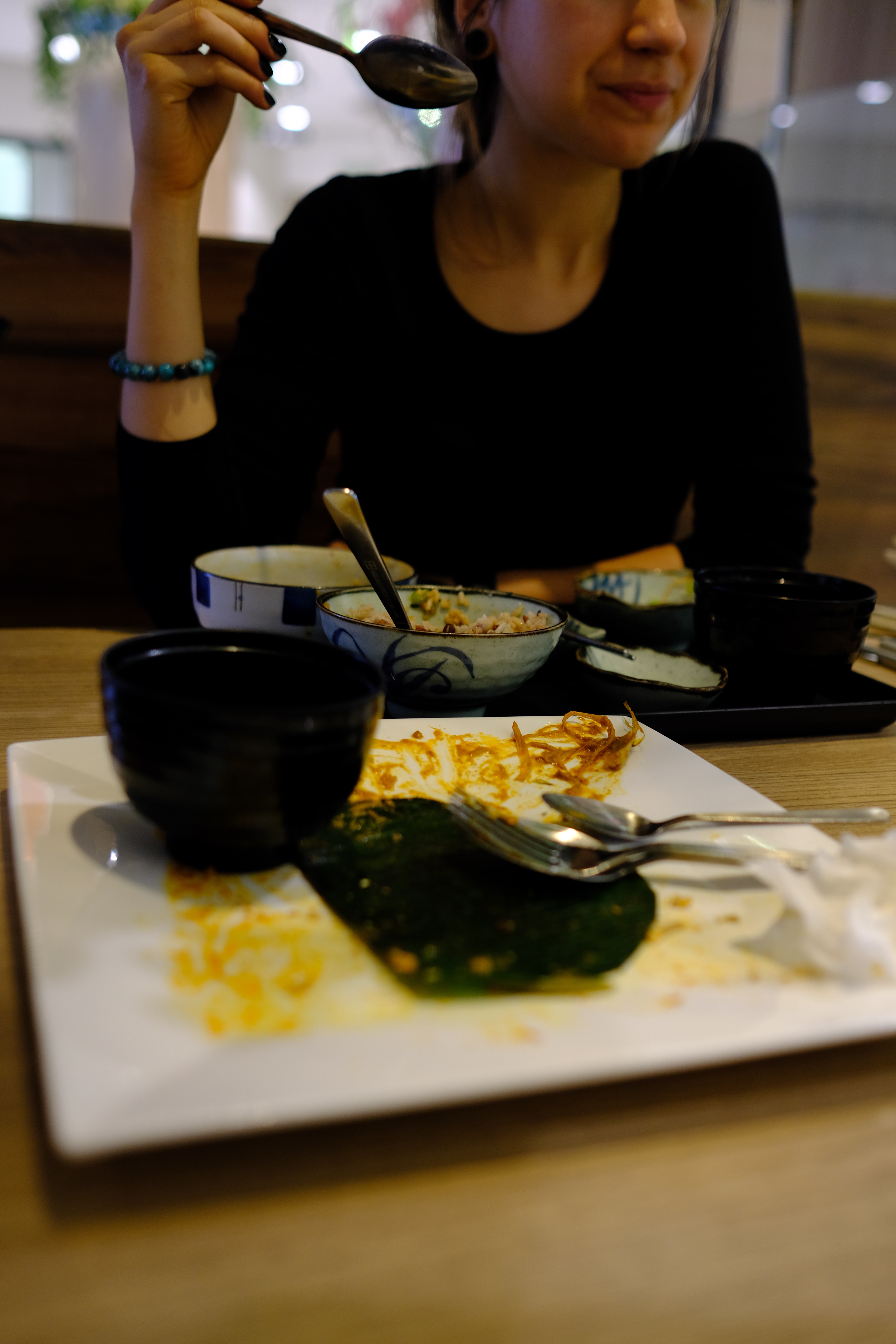
    It was vegan heaven. And it was so incredibly delicious, we ate there everyday.

    IMG_6005.jpg

    There’s a happy vegan.

    I recommend the Kao Soi, a North Thai specialty of noodles in a spicy coconut broth topped with crispy fried noodles and other fixin’s. Thai food plays with sweetness a lot more than other Asian cuisines, but this bowls has a perfect harmony between everything. The sweetness from coconut, savoriness from mushrooms, spice from chilies, sour from lime, and bitterness from pickled roots. I, of course, made it dragon level spicy with a bit too much pepper sauce. Instead of chicken, they use mushroom stalks for a surprisingly identical meatiness.

    DSCF2171.jpg

    With full, happy vegan tummies we went in search of Chiang Mai’s best temples. This would turn out to be a relentless journey through dozens of temples, but how else is one to enjoy Thailand? They do all get a bit repetitive but I just want to drink in all the gold covered goodness.

    DSCF2076.jpg

    I do get a certain pleasure from the glitze of Thailand’s Theravada Buddhism. If there’s space, throw in an emerald. If it’s not gold, make it gold.

    DSCF2082.jpg

    DSCF2084.jpg

    It’s a stark contrast to the somber natural influences of Zen Buddhism, but Thailand would not really be Thailand without its golden temples. So we enjoy. But I find it interesting how I compare certain aesthetics elements to Catholicism, just in showing the wealth of religion through extensive gold plating. But the most interesting temple of the day would be Wat Chedi Luang, which was built in the 14th century during the Lanna Kingdom. Now it is merely a ruin, yet it still serves as a relic to the power of the Old Kingdom of the Golden Triangle.

    DSCF2101.jpg

    As a non-vegan, my tummy gets a bit hungry soon after. But I blame that more on the small portion size rather than the sourcing of what’s in the bowl. So we head to the Saturday market to be surrounded by tourists, kitschy goodies, and some snacks.

    DSCF2125.jpg

    Where do you find a mountain of squid in the mountains?

    DSCF2129.jpg

    Neither wanting squid nor horror-show amounts of meat, we opt for my favorite: mango sticky rice. This rice is cooked using a flower, giving it a unique blue-green color. He may have used food coloring, but who cares with sticky rice this good.

    DSCF2130.jpg

    We’re both a bit too tired for a night out on the town, but we grab a beer on the party street to catch up a bit more. It’s difficult fitting two years of life into just a few conversations, but we try our best.


    Our goal for Sunday is to get to a temple I found randomly called Wat Pha Dat in the mountains. I don’t know why, but it looked interesting on the map and I heard rumors of a waterfall. Not knowing where to go or what to see there, we head out with google maps telling us the directions. Our hostel loans bike’s out for free, so we ride to the outskirts of town near the Chiang Mai zoo. Last time Cesar and I road bikes, we road from Aalborg to Hals, on the East Danish Coast. While we did get the best strawberries I’ve ever tasted, the ride took about three hours after getting a flat tire and warping the back wheel. So our only hope was to come back home without a flat. We ride to the outskirts, and learn our destination is up a hill more treacherous than our shitty free bikes will escalate. So we make a recourse, and after asking a nice person in a fish costume at the zoo learn that we must venture through the huge Chiang Mai University complex. So we enter, and ride through the massive University to the other side and stop for a bowl of noodles before making our journey. We figure we can park our bikes at the foot of the mountain and hike up, so we find a little random backstreet and make the hike. After a good thirty minutes walking through mud and forest, we summit on a nice view of the unexpectedly huge city.

    IMG_6037.jpg

    Locals are camping out and enjoying the shade and the view, sitting on dry outcroppings of a wide waterfall.

    DSCF2153.jpg

    The weather is much cooler up here, so we enjoy not being in 33 degree weather for a while.

    DSCF2140.jpg

    Where are we going? Neither of us knows. We walk up the hills and come onto a road, and my phone says the temple is just up to the left. We walk a bit and come onto a large stupa with a nice temple.

    DSCF2157DSCF2158

    I suppose it was nice but it wasn’t that nice. Only upon returning later that evening did we learn we hadn’t even made it to the end: where a huge beautiful temple complex and a native village awaited. Pity, this was one instance where I wish I had done my homework a bit better. But the walk through the forest and waterfall visit was enough to make me happy.

    DSCF2162.jpg

    We got back down the mountain, back into the heat and back onto our bikes. The search of the best temple continued!

    DSCF2170.jpg

    Today’s best temple: I have no clue what it was called. But it was gorgeous and gold covered!

    IMG_6040IMG_6042

    We stopped by the Silver Pagoda on the way back, which I did not choose to go into but Cesar said was interesting enough. It all looked a bit too constructed for tourists for me, which it did turn out to be. We hopped back on our bikes and headed back, which took a little bit longer because somewhere along the way I got a flat tire. Old habits die hard I suppose. After dropping off our bikes, we headed to the Sunday Market for more kitschy goodies.

    DSCF2172.jpg

    Tonight as well, Roots, Rock, Reggae, had a great local Reggae band for our slow dancing to enjoy. Alex from the first night was there as well, but he seemed to still be a bit hungover from our Friday night together. We didn’t stay until the bars closed, but long enough to enjoy the good music.

    All of my days have run together in Chiang Mai. They all seem so identical, eat vegan food, look at temples, look at the same kitschy clothing stalls, and get a beer and listen to reggae. Is my life so boring that I can’t even change up routines when in a new location or does Chiang Mai just offer a lot of the same thrills? Or perhaps I’ve just spent too much time here when I should have gone to Pai or elsewhere for new experiences. Regardless: I had one more day to enjoy.


    Monday started with my favorite temple of the whole trip, Wat Phra Singh.

    DSCF2181.jpg

    The harsh sun made the stupa blinding to look at. We went back to the hostel to recharge a bit and made friends with an Icelandic traveler named Osk who wanted to head to a park to enjoy the evening cool down together.

    DSCF2188.jpg

    It seemed to only be expats and tourists in the park, yet there were some locals playing Sepaktakraw. Its a bit like volleyball, but with feet.


    We met up with Alex, a Brit, and Toby from Germany. Everyone wanted to go to a night market, which I can’t really say no to. I do love a night market, even if I do it every day.

    The Night Bazaar is specifically tailored to tourists, though. We spent a bit too much on European priced food, but the atmosphere was nice and the company was good. After eating, I decided to get back to sleep for my early morning flight the next day.

    Chiang Mai is an interesting place, mainly because it feels more removed from Asia than anywhere else I’ve been on the continent. Even Hong-Kong, a former colony, is more in touch with itself. During my time in Chiang Mai, I saw far too many expats and resort going tourists for me to feel like I was experiencing something truly unique. What I will say, is Chiang Mai is an excellent break from the cities of Bangkok or even Hong-Kong. The food is good, and the nightlife is just right for those craving some calm. There are places to get more in touch with the locals, which we found when we were biking around endlessly near the University. I think Chiang Mai is a nice city, and Thailand is certainly a great place to introduce oneself to Asia. It is clean and friendly, but a bit too sterile compared to Cambodia, Vietnam and even Hong-Kong to a certain degree. While I am happy I went, I am mainly happy to have seen Cesar in a perfect catching-up city. Chiang Mai was a perfect city to see an old friend. It was quiet enough to take our time in, and not crazy enough to distract from our conversations. For that, I am grateful that I came.

    DSCF2114.jpg

    Thank you for reading! I apologize for the different tone to this piece, but I guess not every trip changes us in the same way as others do. This was mainly a trip to catch up with an old friend and thus did not make for the most in terms of material. I hope to see you again soon though for some new adventures. Thank you again for sticking with me!

    Screen Shot 2018-11-07 at 11.02.19 AM.png

  • Albania: The Next Big Thing?

    Last April, I had the amazing opportunity to travel with Black Hummus Diaries through Northern Macedonia, Albania, and Montenegro. It was my first time in the Balkans, and it certainly will not be the last.

    Screen Shot 2018-10-29 at 6.20.42 PM.png

    When I think about the highlights from the whirlwind of a ten-day trip, Albania would certainly be high up on my list. Albania has been one of my travel priorities since I first moved to Europe four years ago. There is a mysterious quality to the country and the fact that it exists on no one else’s bucket list made me very intrigued. People do not know a lot about the country. The first thing that usually comes to people minds would be the mobsters from Taken or the sneaky, adorable child spy that stole nuclear plans from Homer in an early episode of The Simpsons. These being the highlights of Albanian culture in the West, it’s understandable why Albania doesn’t come up more in travel magazines. But it absolutely deserves it.

    Albania has an extraordinarily old language and culture that has prevailed through centuries of control by the Romans, Byzantines, Venetians, Serbs, and Ottomans. Basically everyone. But Albanians have a strong connection to their national identity, especially when national hero Gjergj Skanderbeg united Albania and kicked the Ottomans out in the mid-1400’s, subsequentially putting a thorn in the Ottoman Empires’ ability to conquer Europe. Even with this strong uprising, Albania did not officially gain independence until 1912, an independence which the nation has (more or less) held since. Italy did swing by in the second World War and set up a puppet state, and the Albanian retaliation came from the Communists within the country. Once communism was established in Albania, it did not fall until about 1990 with the eventual crumble of the regime. This was due mainly to the death of Albania’s dictator, Enver Hoxha, who had been in power for over four decades. Under Hoxha, Albania was one of the most reclusive, closed off states in the world. The scale of propaganda and corruption was nearly on the scale of North Korea, and is still something the nation is recovering from to this day.

    IMG_3830 (1).jpg

    I apologize for getting wordy, but the main takeaway is: Albania houses one of the most complex cultures and history’s in Europe. Because of this, traveling to Albania is a completely unique cultural experience. It is completely different in Greece, Montenegro, Northern Macedonia, and Italy just across the Adriatic. Its language is like nothing else, and the locals are proud of that. Albania has some of the most serene mountain landscapes, some of the whitest beaches, and some of the best food available in all of Europe. So, much like my recent post on Northern Macedonia, I would like to give some recommendations and talk a bit about this country that should be higher up on more people’s lists. While I have not traveled extensively in Albania, here is what I have to say about several destinations. I hope to return soon, and I hope to see you there!


    Tirana

    The capital of Albania was, by far, one of my favorite stops in the country. After having met some locals in Berat (a city in the south), who had told us Tirana was nothing more than a loud dirty city, we were a bit hesitant to even journey there. We figured, “Hey, let’s just stay the night and head up North at dawn.”

    But I am so glad that we stayed, and I honestly could have stayed much longer.

    IMG_3832 (1).jpg

    This is the Mausoleum to Enver Hoxha. It’s a huge brutalist concrete pyramid, no longer housing the decomposing former dictator, but now serving as a popular spot with locals to show off their climbing abilities. Albanian’s are some of the friendliest people in Europe, rivaled only by the Greeks and Georgians (if you count Georgia as European, which I both do and don’t). If you want to impress them and make some friends, start climbing! It’s a bit steep, but if you bring decent enough shoes you can make your way up easily. Some locals will see you struggling and likely teach you how it is done through broken English. “Look, is easy! Come my friend!” they’ll say before sprinting up.

    IMG_3842 (1)

    I was too much of a scaredy cat to make it up, but I had an awesome time sliding down. This is merely an example of why Tirana is so lovely: just in its weirdness. Since Albania was so closed off to the trends of the West, they had to create their own bizarre architecture. Because of this, walking around Tirana is a constant experience of stopping every few blocks just to stare at a building in confused awe, holding your chin and repeatedly muttering, “Why?”

    But wandering through Tirana is perhaps the best thing to do. The city is wonderfully green, lined with trees and hundreds of thousands of cafes. Albanians are much like the Greeks, in the fact that they would rather be at a cafe smoking with friends than doing anything else. Because of this, there are seemingly millions of cafes, selling cheap and delicious tea and coffee. The amazing thing about it is, every coffee shop seems to be entirely filled. It’s the best way to relax and people watch and enjoy a nice cheap coffee.

    Tirana is also an amazing city for the antique junkies of the world. My only goal was to buy a nice rug, and after much searching, I purchased exactly what I had in mind from a little back-alley shop for about $23. What was really excellent about it was the whole experience of the purchase. I had previously been in Morocco, also on a hunt for a rug. The experience is quite nice there as well, but very different. Moroccans, Turks, and I guess any rug dealer really, are fantastic salesmen. They sit you down, give you tea, and show you hundreds of the most beautiful rugs you have ever seen. They tell you the story, how these rugs were made in the mountains by blind nuns who only create rugs for this shop because the shops’ owners’ great-grandfather fought to protect the village from barbarian raiders 100 years ago. He’ll tell you how it is made of fine wool, from the same lineage of sheep as the flock originally shepherded by Abraham. You will no doubt be amazed and purchase the rug for whatever exorbitant amount it costs, and you will never know that it was actually made in a sweatshop in India for 1/1000th of what you paid for it (Note: I know I am being rather cynical, but I had too many heated arguments with salesmen telling me pure nonsense that I now have to be a bit cynical. I am aware that there are many gorgeous one-of-a-kind rugs, but I most certainly did not find any).

    Rather than get the whole story, I pulled the perfect rug out of a stack of dusty rugs and showed it to the antique dealer, asking about its story. He did not really even look me in the eye, but said: “It is uh, rug from working-class Tirana family.” No story, no Abraham wool, no price for friends or heated argument. He then went to talk to some local customers, looking at some old tea kettles and plates. It was rather difficult to get his attention, and I loved that. In Morocco, I am always heckled with “Buy, buy, buy! Good Price!” that whenever I have to work a bit I feel spoiled. I was ready to barter for this rug and got all confident and ready to argue over it. When I finally got his attention and asked, he sort of shrugged, this time looking me in the eyes, and said “$25”, to which I almost had to hold myself from shock.

    “I’ll take two!”

    We began talking to him, and he was so happy to have met us that he went down to $23 without any real bartering at all. He insisted we take a photo together on my phone, and we shook hands with a whole-hearted “Faleminderit” (thank you) before heading on our way.

    IMG_3934.jpg

    It’s not as pretty as a blind nun rug, but I love the story and the two-headed eagles from the Albanian flag (and it’s huge).

    More than the rug and antique shopping, Albania has some of the best produce available. Since they are not a member of the EU, they have no regulations on their agricultural practices. This means the tomato in the market probably came from a little farm out in the hills, rather than a huge farm in Spain or a double-decker greenhouse in the Netherlands. Because of this, the produce we ate in Albania was some of the best I’ve ever eaten in my life. I have this distinct memory of sitting on a bench in Tirana, eating the juiciest, most savory tomato and crunchiest cucumber I’ve ever tasted, thinking “this is the way a tomato should taste.” It tasted straight out of a garden, and I only spent a few cents for it at a little roadside vegetable stand. This was the case with every food product I ate in Albania. Almost every meal we had was a little picnic of tomatoes, cucumbers, olives, and goat cheese. Every bite of it was like looking up the taste of ‘olive’ or ‘feta’ in a flavor dictionary and enjoying the definition of how it should taste. I long for the Albanian picnic.

    So if you have time on your trip, do certainly add Tirana for a few days of cafe hopping and architectural weirdness.


    Berat

    Albania, as I said early, is a country with a complex history. That history can be best enjoyed in a little town, like Berat. Located in the Central-South part of the country, the town is filled with traditional Albanian houses and an excellent Ethnographic museum detailing the cultural heritage of the area.

    IMG_8516.jpg

    IMG_8517.jpg

    There are many affordable guesthouses and hostels, giving the opportunity to stay in one of these traditional old buildings. Our hostel was incredibly cheap and wonderful, and the owner would sit and chat with us about Albania over thick coffee in the mornings.

    Nearby, a huge fortress sits atop a hill, looking out into the mountains and serving as a spot for local kids to have a football shoot-out.

    IMG_8528.jpg

    I apologize because it was too cloudy, but the mountains are gigantic.

    Walk around the fortress a while and admire the spectacle of Albanian nationalism, trying to preserve the sanctity of the country from high.

    IMG_8550.jpg

    What is really amazing as well is how few tourists are walking around. Albania is a completely undiscovered paradise.


    Shkodër

    This is a city I wish I could say I liked. To be honest, it felt very fake. But! Shkodër has some excellent trekking possibilities up into the mountains or around nearby Lake Shkodër, and some very amazing hostels. We stayed at Green Garden Hostel, which was pretty far from the center but provided us with an extraordinarily relaxed atmosphere. The owner gave us a ride up to Montenegro the next day as well, which was perfect.

    IMG_3852 (1).jpg


    So, I’ve talked about the beauty of Albania. We did not even visit the beaches, which are fabled to be some of the best in Europe. Before going to Albania, it is also important to note that the country is changing quite a lot. This means a lot of people are being left behind. Albania is perhaps the poorest nation in Europe, rivaled only by Moldova. This is a kind of poverty seen nowhere else in Europe, and a kind of poverty one would see when traveling to countries in South America. Albania is a country to be enjoyed, from its food to its nature, but please be respectful towards its wonderful people. It would be horrible for this wonderful country to be heavily commercialized and lose its essence, so please do travel responsibly. The Albanian people have been through decades of hardship, and are now just opening up. I do not wish for their kindness and resources to be exploited to a level that hurts their beautiful culture, and I hope that you will feel the same.

    Albania is a fantastic country, and it is certainly one I would like to explore and learn more from. It is the perfect stop on a Balkans road trip. It can also be added to any trip from Greece or added to a trip through Southern Italy with regular ferry passage from Bari. The country packs a lot into a small package, one that will take many trips to unravel fully. But from one trip, I can tell it is more than worth going back again.

  • What to do in Northern Macedonia

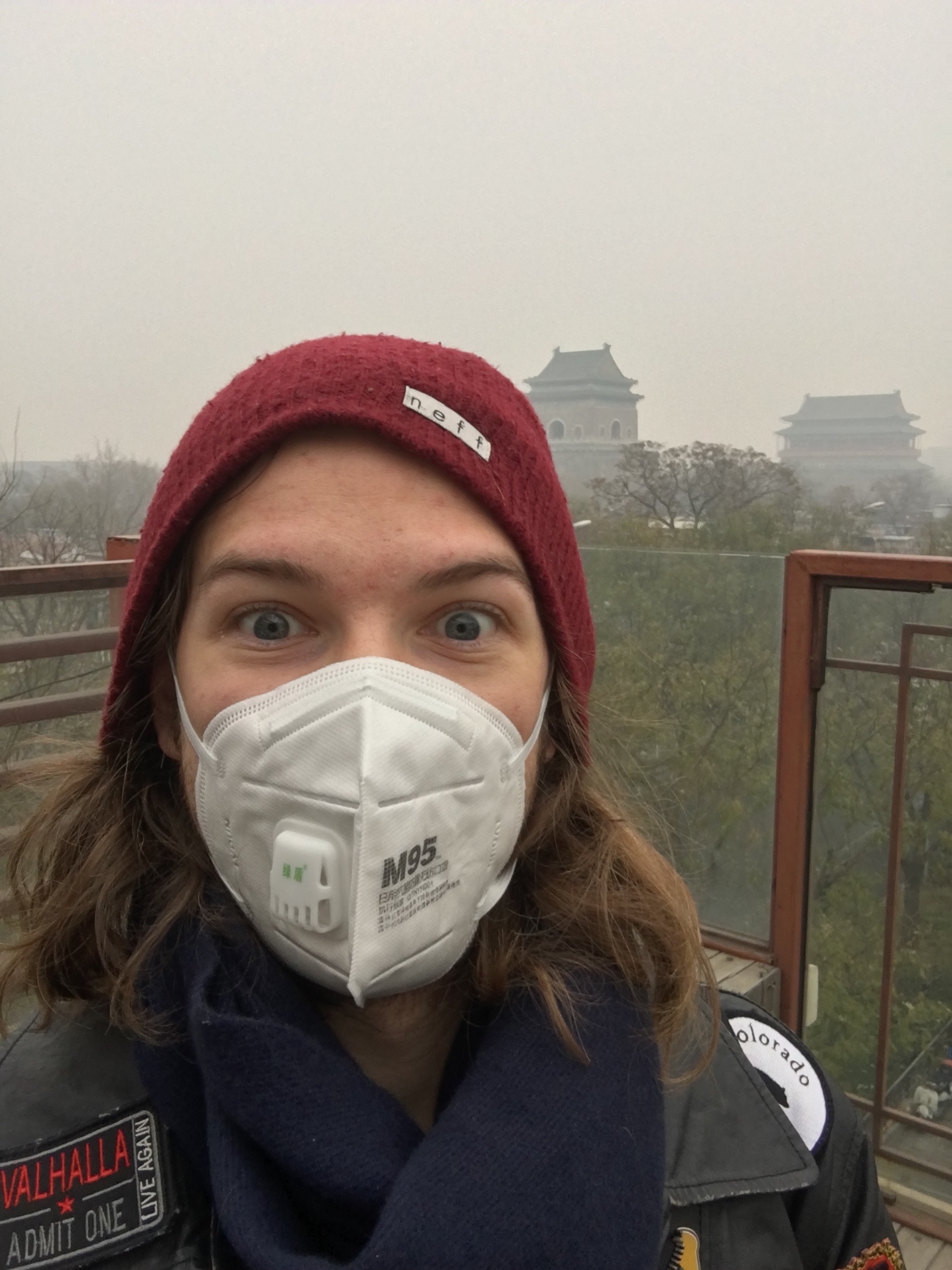
    Here’s a bit about a trip I took last April with Black Hummus Diaries through the Former Yugoslav Republic of Macedonia (soon to be Northern Macedonia), Albania, and Montenegro. I really love Northern Macedonia a lot, more than I thought I would. Here’s my happy Macedonia face (disregard the shitty facial hair, I was lazy).

    IMG_8108.jpg

    I simply wish to reminisce about the trip, and hopefully, give you lovely readers the urge to come to these wonderful little nations. So here is what I’d recommend for a first time Macedonia adventure. Enjoy and please like, comment, and subscribe if you feel!

    Screen Shot 2018-10-27 at 6.33.45 PM.png

    Skopje

    Let’s begin in Skopje, the bizarre capital of Northern Macedonia. From its eclectic New Town to the straight out of the Ottoman Empire Old Town, Skopje is absolutely worth a few days of exploration. So, what to do?

    Oogle at the Statues

    IMG_8154.jpg

    Northern Macedonia has been trying to join the EU and NATO for the past few decades. It’s been a frustrating process since Greece keeps blocking their acceptance due to the problem of their name, as ‘Macedonia’ also happens to be the name of the second largest region of Greece (yes I know it’s a little more complicated than that but we’ll keep it here). Regardless, Northern Macedonia has been pouring bucket loads of funding into their new quarter of the capital, erecting statues of national heroes and artists wherever there’s a free plot of land. Above, you can see the monumental statue of Alexander the Great piercing the air. His statue is about the same height as the surrounding buildings. In Skopje, it is completely feasible to run into a statue while staring at another one. It’s bizarre, to say the least.

    IMG_8172.jpg

    In a way, Northern Macedonia is setting up this glittering facade to show the EU and NATO delegates how mighty and culturally influential the nation is. It feels a bit like a little boy showing off his rare Pokémon cards to his non-caring teenage brother. It’s equally adorable and endearing, and almost impossible not to walk around with a dumb smile on.

    IMG_8175.jpg

    IMG_8204.jpg

    IMG_8208.jpg

    But all of this monument building is something I can completely understand. For a nation that has been independent for less than three decades, it must be difficult to create a national identity. Especially with raucous cultural neighbors like the Greeks, Serbs, Bulgarians, and Albanians. Northern Macedonia has more or less been overshadowed by a greater empire since the dawn of civilization. The Greeks, Romans, Ottomans, and Yugoslavs have all been through here, leaving the national image of the country a bit confused. Northern Macedonia is testing out its own personal history, one that isn’t Greek or Serbian or Albania: one that is uniquely Northern Macedonian. They’re still in the process of finding out what it means to be North Macedonian, and for that, I respect them and their overuse of statues.


    Get Lost in the Old Town

    Just across the river from the behemoth Alexander the Great is a quiet Old Town straight out of the Ottoman days. A walk through Old Town Skopje feels much the same as a walk through a quiet street in any old Turkish town, but with a few differences. Buildings are no taller than a few stories as streets wander and flow with no proper reasoning.

    IMG_8185.jpg

    The call to prayer still rings five times a day like everywhere else in the Arab world, but the shop signs are all in Cyrillic and the old Christian men drink tea with their Muslim neighbors. The Skopje of today is wonderfully integrated, and the Old Town is the perfect place to wander around aimlessly for a few hours.

    IMG_8186.jpg

    Tea shops will sell a cup for US$.50, or perhaps a thick sugary black Turkish coffee for the same price which can be enjoyed alfresco under the trees next to a mosque. Catch up on some postcard writing, or just listen to the old men discuss old man things.

    IMG_8259.jpg

    Time moves slowly on this side of the river, almost as if it is locked in a time portal.

    IMG_8258.jpg

    This is an ideal place for people in search of good food as well. Head to any shop nearby for kebapi or head to the Old Town Bazaar, which has been selling some of the freshest local produce since the 12th century.

    IMG_8264.jpg


    Climb Mount Vodno

    Well, climb is a bit of a stretch. But it definitely did get my sweat going. We stayed at Hi Hostel Skopje, which was fairly far from downtown but very close to Mount Vodno (the owner is fantastic as well, and there’s a comfortable garden to enjoy a coffee and a book). The hike goes through some nice mountainous paths, and most of the time a cute stray dog friend will guide you up the well-trodden path.

    IMG_8283.jpg

    We came in the Spring, which made for some excellent blooming moments.

    IMG_8285.jpg

    I love a good picnic, and just about anywhere on this hike is perfect for it. We stopped about halfway up for a breather and a beer. We parked right below the gondolas because I get a certain odd satisfaction from waving like an idiot at passing strangers. Northern Macedonians are extremely friendly, and more than willing to wave back.

    IMG_8291.jpg

    There’s also an abandoned bunker for those in need of a photo shoot.

    IMG_8304.jpg


    Ohrid

    Screen Shot 2018-10-27 at 6.45.38 PM.png

    Next let’s go to Ohrid, a spot that cannot be missed in Northern Macedonia. Ohrid, even after almost seven months, still feels like a dream to me. One should travel to Macedonia simply to see Ohrid. It’s a luminous, picturesque city and UNESCO Heritage site. It’s been around for centuries, and every little corner is perfect.

    There are regular buses running from Skopje, and some buses coming from Tirana. We took the bus from Skopje, which was a great ride. I’ve heard rumor of buses coming up from Northern Greece as well. The roads are decent enough and the views are excellent, so don’t be afraid to hop on the bus for a cheap trip to paradise.

    IMG_8496.jpg

    We spent several perfect days here staying at a great and cheap Airbnb apartment with a patio facing Lake Ohrid. The city is this perfect mixture of Swiss mountains, Italian lake beauty, and North Macedonian kindness.

    IMG_8323.jpg

    Christianity has a stronger hold in Ohrid, and one could spend days just wandering through churches.

    IMG_8328.jpg

    But of course, the postcard must-see is St. John’s. Come at sundown and stay a while for a bit more photo taking privacy.

    IMG_8465.jpg

    The water of the lake is a fine turquoise blue, and the summer months yield great swimming. It was still a bit too cold for a dip in April, but that water was tempting.

    IMG_8362.jpg

    IMG_8415.jpg

    The old town is adorable and filled with small restaurants and bars. Everything is very cheap in Macedonia, and the locals are fantastic. I want to return as soon as possible and see what else the country has to offer, but Skopje and Ohrid are excellent places to start.

    IMG_8402.jpg

    Thank you for joining me on this little side journey down memory lane. I’ll be doing a few more memory lane posts, but I’ve got new content coming your way in about two weeks time. Thank you for your awesome support!