The Weekend Rambler

Always Authentic. Always on its own path.

  • Hitching Portugal’s Armpit

    Well, perhaps not the armpit. Some people really like this part of Portugal. Some people also like licking armpits.

    I am neither of those people.

    And I suppose an armpit in winter is far more curvy and elegant than it is in the summer. For me, this armpit was hot, sweaty, and reeking of rotten tomatoes.


    You last left me in Porto, up North in Portugal. My goal was to get all the way down to the South East, past Castelo Branco and into the desert of Portugal. There, my long-time partner in hippy crime and co-thesis writer, Fine, was working on a seed farm. As both of our wanderlust filled lives see us on other sides of the planet at all times, I figured this may be the last time to see her until who knows when.

    I arrived a bit late to the bus station in Porto, a hot and sweaty basement beneath an apartment building filled with tired backpackers. I expected there to be no line.

    The queue was immense.

    I missed the bus and figured, “fuck it, I’ll just hitchhike. Fine just hitchhiked here all the way from Lyon, I can hitchhike halfway across the country.” I checked up on hitchwiki, did my research, and headed out into the sticks on the border of Porto. There, I trudged through the heat with my backpack to a rest stop right off the highway. I climbed under a barbwire fence, cutting myself and risking fresh tetanus, and pitched myself among the slowly passing cars with a shiny thumb.

    I sat…

    And sat…

    And nobody stopped for poor hippy Carter. I sat, smiling and waving and receiving no response for about an hour and a half. At one point, a man stopped on the other side of the lot and stared intently at me from the dark windows of his fine German automotive tuna. I noticed him and kept up my happy go lucky facade. He continued to stare, sitting in his car with his gaze unfazed for five minutes. I looked around me. Behind me were trees and a dumpster. Nothing worth staring at for five minutes. I crossed myself and prayed to the Hitchhiking Gods that I remain intact and not in that dumpster behind me missing my kidneys.

    The man stepped out of the car. He was skinny, dressed quite fashionably in a nice shirt and designer glasses, and I must say quite handsome. He walked to the bathroom of the gas station, not taking his gaze off me as his thin legs strolled across the steaming pavement. He stayed for several minutes, exited, kicked around in the dirt sadly, then returned to his car to stare at me for ten more minutes. By this point, the sweat had reached the nether regions of my personal horizons.

    He stepped out of his car and walked in my direction. “Towards the dumpster?” I thought. No, toward me.

    “Bom Dia.” I said in my ‘confidence’ voice in his direction.

    “Hello,” he said sheepishly, putting his hands in his pocket as he approached me. He stood at a good distance and did not seem intimidating at all. “Where are you going?” He said, taking a hand out of his pocket to wring the back of his neck as if he were feeling it for the first time.

    “Castelo Branco, but Coimbra would be perfect.”

    “Oh okay…” putting his hand back in his pocket. “I’m not going that far, I’m not going that far at all.” He pulled out his phone and showed me where he was headed on the map. Only the next town over from the gas station.

    “Ah okay, no worries then. Do you maybe have any tips for hitchhiking in Portugal? It’s been a tough day.”

    “No, no, I wouldn’t know anything about that.” He said, slumping down into his spine a bit. “This gas station though, it’s actually uh… a place for gay people… you know. To meet.”

    “Oh! Okay…”

    “Would you… would you be interested in any of that?”

    “No, no, no, I’m okay,” I said with the half-assed laugh of an embarrassed high school girl. “But I mean, thank you for the offer, I’m very flattered.”

    “Oh…no worries….” He turned away. He walked a bit forward, then turned back “…are you sure?”

    “Yes, quite sure. Have a nice day!”

    At this point, I decided peeing behind the dumpster may be the safest option.


    After another hour or so of unsuccessful hitching, I admitted defeat and trudged through the all-encompassing heat back to the bus station. I begrudgingly threw my 20 Euros at the bus ticket lady and found myself on a bus straight to Castelo Branco. There I sat, wondering what life would be like if I were able to throw myself into a gas station bathroom with a random man and come out of it feeling stronger than I entered. My brain daydreamed all the gratuitous details accompanied by that thought, and I pondered over I would enjoy that even if I were gay. To each his own, my lovelies.

    I arrived late to Castelo Branco, one of the largest cities in the South East of Portugal. This was the exact opposite of Porto. Absolutely no tourists, and absolutely no chance of a cool breeze. Bugs rang their songs thick in the steaming arid air, and I melted along the street in search of a hotel. I found a nice little inn, untouched since the 1960’s, with a damn good price (for a good reason). The owners seemed burdened by my presence, as they were just sitting down for dinner as I entered. The man got up and grabbed his cane, hobbling over to a computer that has gathered dust since 1997. “Leave before 9!” He shouted, handing me a greasy key.

    The next morning, I went to the bus station to ask for a bus to Idanha-a-Nova, the town closest to Fine’s farm. “Today is a holiday, no buses.” The young man said from behind the glass window.

    “But it’s Thursday!” I squealed.

    “But it’s Portugal.” He said with an apologetic smirk.

    I sat tight, drinking coffee and reading Paul Theroux’s The Great Railway Bazaar while Fine hitched over to guide me through. Before long, we were escaping the sun in a shady patch eating fresh figs and pumpkin seeds. Castelo Branco is excellent for the off-the-beaten-pather. It’s adorable, and there’s no one visiting. Perfection.

    Fine and I headed to the road and put out our thumbs. No buses go directly towards the farm, so one either has to hitch or walk a good two hours. We stuck to it, through all the strange stares. An old man came walking past, mumbling in some unintelligible Portuguese dialect “You’ll never get a ride, never get a ride.”

    We kept our spirits up, listening to cumbia and drinking some tereré (yerba mate with cold juice). Eventually, a man with a ponytail came riding his bicycle, asking with a smile where we were from. Fine smiled back and said Germany, and that she’s working on a farm.

    “Oh! Does she work hard?” He asked me with a laugh. “This little girl?! She likes it hard doesn’t she!” He grunted in my direction, bending his arms upward while shifting his hips back and forth along the seat of his bicycle as if he were shining it with his ass and dilapidated testicles. I gave him a long hard look and decided that he didn’t much deserve an answer. He looked back to Fine and mumbled some other nonsense before riding off. Hitchhiking is never a boring experience.

    Eventually, a pair of priests were able to drive us up to the main road. They were incredibly warm, and somehow Protestant rather than Catholic priests. They dropped us off on the turn in to the main road and waved a holy goodbye. It was only about twenty minutes before a beige and beaten up minivan pulled over. At its helm, a middle-aged woman with huge dragonfly-like sunglasses. “I do reiki and energy work,” She told us. Fine was in hippy heaven.

    She recounted the tale of how she came here with her exhusband, just passing by on vacation. When driving past Castelo Branco, a voice told her “You must move here!” She said she listened because all her life the voices in her head told her the truth. Fine said “Go on,” while I made sure the doors were unlocked.

    She was nice enough to take us directly to the farm, which saved us a good hour of walking. She was incredibly kind, and I hope that the voices in her head give her peace. We were home, and I got about familiarizing myself with the spot.

    DSCF5774

    Fine was working on an Organic seed farm and was somehow the only person living on the farm. All the owners and workers either lived in Castelo Branco or another nearby city, giving Fine the farm to herself aside from the gigantic behemoth of a horse dog, Rudolfo (His actual name is Adolfo, but Fine is German so she renamed him).

    DSCF5776

    No kidding, this dog is two meters long if not more. I have never been so close to such a beast. Any fear of theft immediately goes out the window with a dog like this, but he appeared to be too much of a sweetheart to take anything down.

    I figured I couldn’t live for free on the farm without working on it, so the next day we were up early at 5 o’whatever clock to hit the fields. The seed farm utilizes nature, specifically natural fermentation. Apparently letting the seeds rot a bit gives them an extra layer of protection. For this, they wait for their produce to go bad before picking and isolating the seeds. For us, that meant an entire day of picking boiling rotten tomatoes in 40-degree heat. I would grab a tomato, and it would explode a bucket of boiling noxious goop across my pants and hands. At one point, I was carrying two boxes of rotten tomatoes when the box broke under the weight of goo. In the dust laid a mound of melting tomatoes, and the local workers laughed their sun-tanned faces off while I scooped up the biohazard with my sore hands. “Farmings hard work!” One hollered at me.

    The day of picking ended, and I could not have been happier. Fine’s coworker, a lovely Dutch woman, Marit, invited us to join her Friday routine of going to the lake for a beer. We joined, sitting in a shaded encampment with tanned Portuguese listening to horrendously catchy techno music. Marit says she hates working, and realized that after taxes she only needs to earn 1000 Euros to live for a year. So she’ll work until she’s earned those Euros, about two or three months, then she packs up and puts her thumb out in any direction seeing where she may end up. Pretty romantic shit. She’s the kind of freak you don’t see often, and I like it. She invites us to stay at her place in Idanha-a-Nova, where she drops us off and sets us loose.

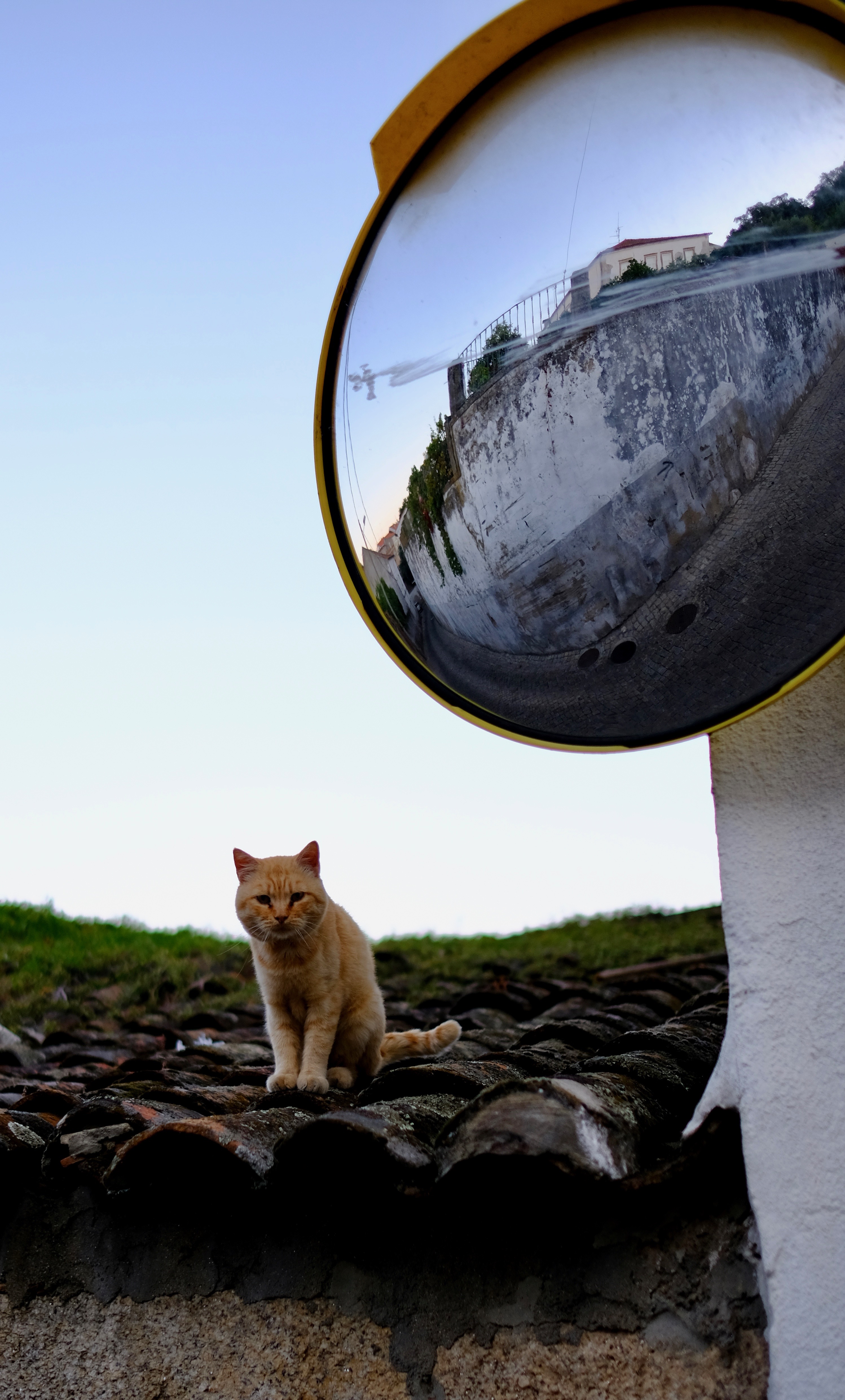
    The town doesn’t have much to offer but some very untrusting cats.
    DSCF5780

    Marit told of falafel’s in one specific restaurant, and we headed straight there. The bar took a while to find, and when we got there we noticed a large wooden ring surround the nearby square. The floor was covered in sand, and we were perplexed to say the least. “Maybe they sell cows and sheep here,” I thought, reminiscing of the stock show back in Denver. But no answer could be found. We sat for a falafel, which came as four individual and lonely falafel chunks on a plate with half a cob of half grilled corn. We were upset and walked home defeated, having expected a lush juicy falafel wrap bursting with fresh vegetables. We ran into Marit who was enjoying a beer only a few bars down. We sat and opened some beers, enjoying the warm summer night air.

    People began to gather in the square around the wooden fence, and the lights began to fade. In the middle of one of Marit’s stories, a sound of thunder erupted from behind me. I turned and saw a black flash screaming across the center of the fenced off ring, kicking up sand angrily as it charged moving humans. The bull taunting had begun.

    DSCF5785

    We were all a bit disgusted, but I had to grab some photos. I went up, and got just a little too close and almost lost my grandchildren by the tip of a bull’s horn. It was a young bull, but terrifying no less. We stayed for a while, then grew tired after they tied the bull up and shoved it back in the truck to receive an encouragement shock from a long prod. When the bull exited the truck, mouth foaming with blind anger, we decided we had seen enough.


    The next day, we woke and again stuck out our thumbs. The goal of the day was to end up in Monsanto, a famous little rock town pretty close to Idanha-a-Nova. After a good two hours, a nice hippy woman listening to African music picked us up and took us to the main road. There, we waited only a few minutes before a mother and daughter from Lisbon picked us up. They were in visiting family and were nice enough to take us to the next main junction. There we stocked up on bread and picnic goodies, and waited about five minutes before an old beater pulled up.

    I shirtless man sat in the front seat with a younger man driving. Both had their own individual joints in their hands. “Where ya goin?” the shirtless one said in a thick British accent.

    We hopped in the back, next to a young toddler strapped into his baby seat with his arms up behind his head as if he were sun tanning on a Caribbean beach. We drove along, both of the Brits smoking their joints slowly. They kept having to relight them, which made driving a challenge, but they managed. They worked on a farm nearby and had been living in Portugal for over a decade. They drove us straight to the town next to Monsanto and dropped us off right next to a local Saturday market for us to pick up additional picnic olives and fruits.

    Monsanto is a cute town, where the old meets the new. This is perhaps the main tourist destination of the region, but it was still relatively easy to get around. The town is a UNESCO site built on a hill, with houses built around the rocks to create a calm feeling filled with solitude. On the top of the rock is a castle, much like those we saw in Sri Lanka. This castle was built by the templars and has stood the test of time impressively. We lingered a while, steaming in the sun for a bit too long, before heading back to the main road to get our thumbs sore again.

    A van pulled up, filled with a ceaselessly barking dog and two Spaniards. They took us pretty far, up to the main road before dropping us off. The next ride was a man who seemed he had nothing better to do with his life. He was a telecom salesman from Porto, in town to visit family. He was obviously melting and spent the entire ride playing with the A/C. His skin glowed with the sheen of a layer of moisture, giving him the look of an alien that was still getting used to human weather. He drove with his left hand while his shining right hand hovered in front of the mouth of the A/C, turning it back and forth as one would warm their hands by a fire. He had nothing better to do and drove us straight back to the farm.

    The night in the middle of nowhere is quiet and lonely, but the stars are beautiful and Fine and I passed time telling stories and reading to each other. The next morning, we woke up early to get me to the main road. We decided to take Rudolfo, who had been chained for about a week without a walk (not our idea), along for the journey. We walked for an hour in the morning chill, enjoying the sunrise over blueberry plantations and sandy hills. When we reached the road, Fine tied Rudolfo up near a quiet road so she could say goodbye. He was none too pleased and barked his low growl nonstop fearing abandonment even though we were only a few meters away. We decided it was best if Fine go back and not wait with me for Rudolfo’s sake, but it was too late and Rudolfo had reverted to defense mode. He lashed out, biting us with teeth as long as my fingers when we tried to untie him. Gigantic barking and biting dogs scare me more than most things, and Rudolfo’s rage didn’t appear to have an end in sight. At some point, I grew tired and shouted “No!” in my best pack-leader voice, and that someone calmed him down enough for us to untie him. Fine left with the dog twice her size, a dog who was able to lift her by placing his head between her legs and pulling up, and I waited in this oh so familiar spot with my sore thumb.

    A while passed, and after a couple took me to the main road I ended up waiting about 3 hours for a ride. Once I got it, the drivers, some hay farmers, took me directly to Castelo Branco to catch my bus. It was time to leave this corner of Portugal with men as tanned, wrinkled, and skinny as the cigarillos they gnawed in their gums. It was time to head back north to meet up with my adventure partner of 2018, Black Hummus Diaries, for the final leg of my Portuguese adventure.


  • Cruising Northern Portugal

    When we last met, I was heading through the rain on a bus down from Vigo on the Spain-Portugal border.


    Portugal, land of charred octopus, grandiose rock beaches and abandoned houses. Spain’s smaller cohabitant of the Iberian peninsula offers a lot in a small stretch of land, and I intended to see as much of it as possible in my two-week stint starting from top to bottom.

    DSCF5743

    I started off in Braga, a town I am not sure many of you may know about. The rains and Licor de Cafe sweats of Galicia have passed me by, and it was time to welcome the sun and dehydration of arid Portugal. Braga is a small town and the gateway to the Gerês National Park, with not much more to offer the visitor aside from a quiet atmosphere and a cute stroll through the downtown. However, this was the perfect place for me to start my Portuguese journey, as the rest of the trip would be marred with pasty Northerners in nearly every corner of the country.

    IMG_7121

    Like the rest of Portugal, Braga seems to be a bit nostalgic for the days of Empire and colonial riches. Braga is crumbling a bit, but there is a lot of charm to be found in the city. A nights wander was enough for me, with a stop in a local park for a bit of live Fado music. At some point, I stumble into an ‘edgy’ bar. The type with white mannequin bodies lying around and strobey red lights to invoke a seizure-induced hallucination. I stand at the bar and drink a small beer, scribbling in my book as a loud Australian shouted at his companion, someone who seems to regret coming out from the hostel with this brash man from down under.

    “There’s whiskey drinks I liiiike, but I mean straight I can’t do. I feel like that’s not a very fashionable thing to do, you know what mean?”

    His companion nodded, uninterested and growing more fond with the idea of faking food poisoning to go back home. The Aussie turned his attention off drinks and towards me, the tall long-haired man doodling in a book at the bar.

    “Hey, you think that must be the DJ, ya? Like, he’s come in to just grab a drink before his set innit?”

    “Dunno…”

    “Nah, I dunno, he looks a bit too Eastern European…”

    Meanwhile, an aging couple sits together with the kind of smiles that come after years of tears, inside jokes, and scars that have hardened with care. Their faces have wrinkled and hairs have greyed yet the soft strength that they grasp hands from across the tabletop has remained unchanged. They are beautiful, not just in a silver foxey kind of way George Clooney kind of way, but also emotionally.  She begins to tell a tale, on which he holds his attention by picking apart and examining each minute flick of her tongue upon crispy syllables.

    Next door, the lonely Australian still rambles at his uninterested colleague, who still wishes he were in his bunk bed scrolling through Instagram in silence. I leave these juxtaposed tables back to the street, in search of some back alley gritty bar from which I can purchase any brown inebriating liquid while the walls melt into the moldy pit on which the bar sits.

    All I can find are shining discotecas and beautiful Portuguese people enjoying their friends and their plates of ham and cheese. Portugal, as I shall begin to learn, is not a country for the solo evening goer.

    DSCF5745

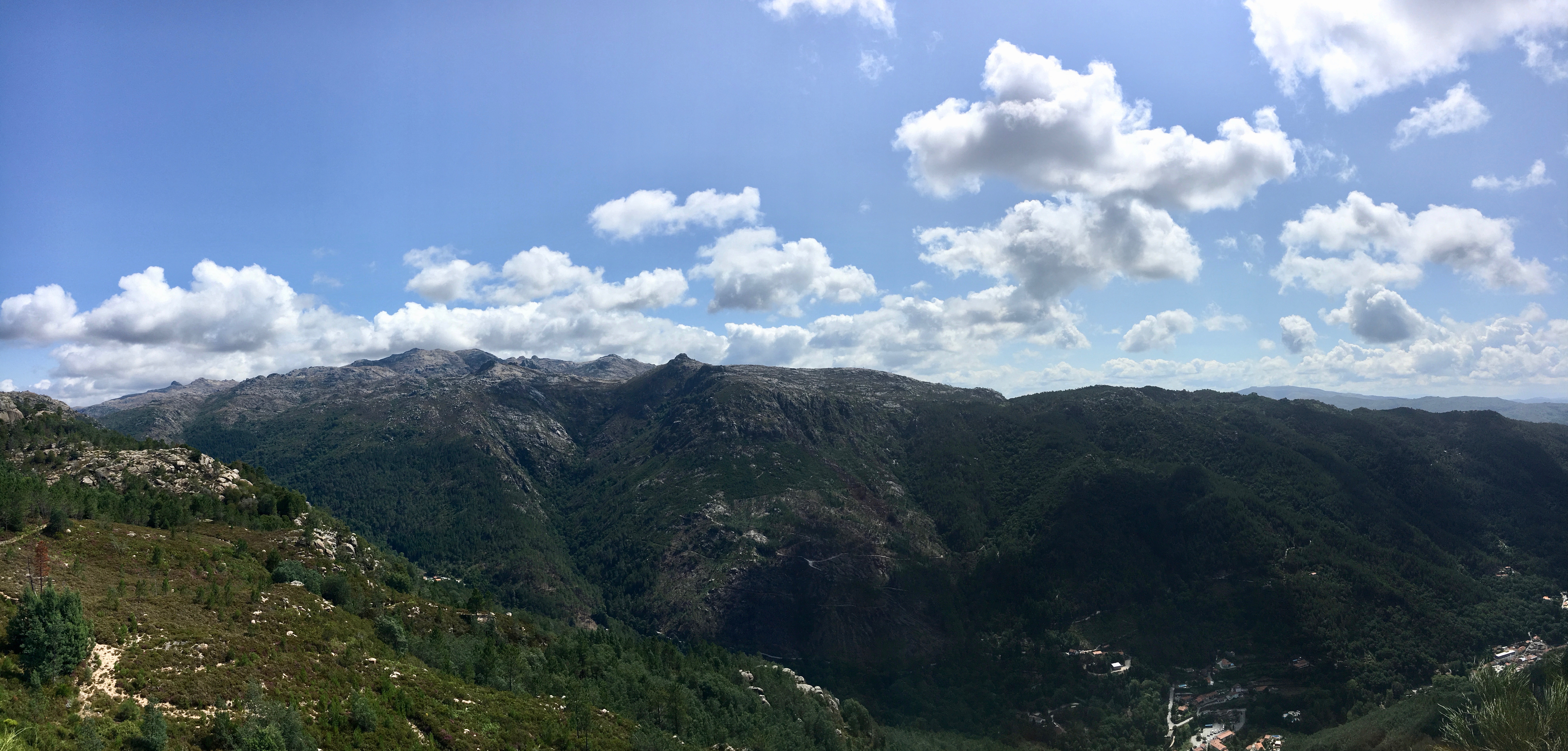
    The next morning I was off early to the Gerês National Park, tucked away in the hills near the Spanish border. The bus, only around 4 Euros, went up and up through fragrant Eucalyptus covered hills that got progressively bigger as we ventured on. It would be rude to my native Rocky Mountains to consider the Gerês Park as mountainous, but it’s pretty darn close with craggy rock covered peaks, pine forests, and a colony of Iberian Lynx roaming for voles.

    A Portuguese couchsurfer told me that “Portuguese are like sheep, they all vacation at the same place at the same time.” This was entirely the case, as a quarter of the Portuguese population seemed to be packed into the hills and lakes of Gerês park. However, I was happy. At least they were local tourists, and they gave a nice flavor to the cute hillside town of Gerês. I stayed in a cheap little inn, nicely called “Grandma’s House”, where a wonderful woman with dangling neck flaps made me feel as if I were visiting family deep in the forests of Northern Virginia.

    While I was traveling alone on this leg of the journey, I felt remarkably happy in my solitude in Gerês. Being alone in nature has never made me feel completely alone. Rather, being surrounded constantly by people plugged up in headphones and starring at flashing screens makes me feel more ostracized than being lost deep in a Lynx filled forest.

    Gerês is an excellent off the beaten path Portuguese destination, even though it’s filled with Portuguese tourists. The area is famous for mineral baths and tap water with gimmicky life-altering backstories. For me, it meant getting lost deep in the woods. I took a completely wrong turn climbing up and up the nearest mountain and ended up on top of a high cliff. At this point, the point when I said to myself “This is how every ‘American man lost in the forest’ story begins,” that I took out my phone and resorted to my GPS. The views from that cliff were stunning though.

    IMG_7125IMG_7126

    I have written in my journal “Couple popping each other’s pimples”, but I don’t even want to try to relive that memory to recount it to you, because I’ve thankfully forgotten it. Deal with it.


    I spent several wonderful nights up in the mountains, breathing fresh air and enjoying being surrounded by trees rather than people. But the rat has to return to the city, and I was soon on a bus towards Porto.

    Porto has long been on my list, having had a roommate from Porto and heard so many rumors of the seaside city of faded glamor. And yes indeed, it was a beautiful city to experience.

    DSCF5762

    I must admit, my first day was rather lackluster. If traveling to Porto, avoid summers. That’s the peak, and peak season in a hot city with hills higher than San Francisco’s make for a crank.

    DSCF5757

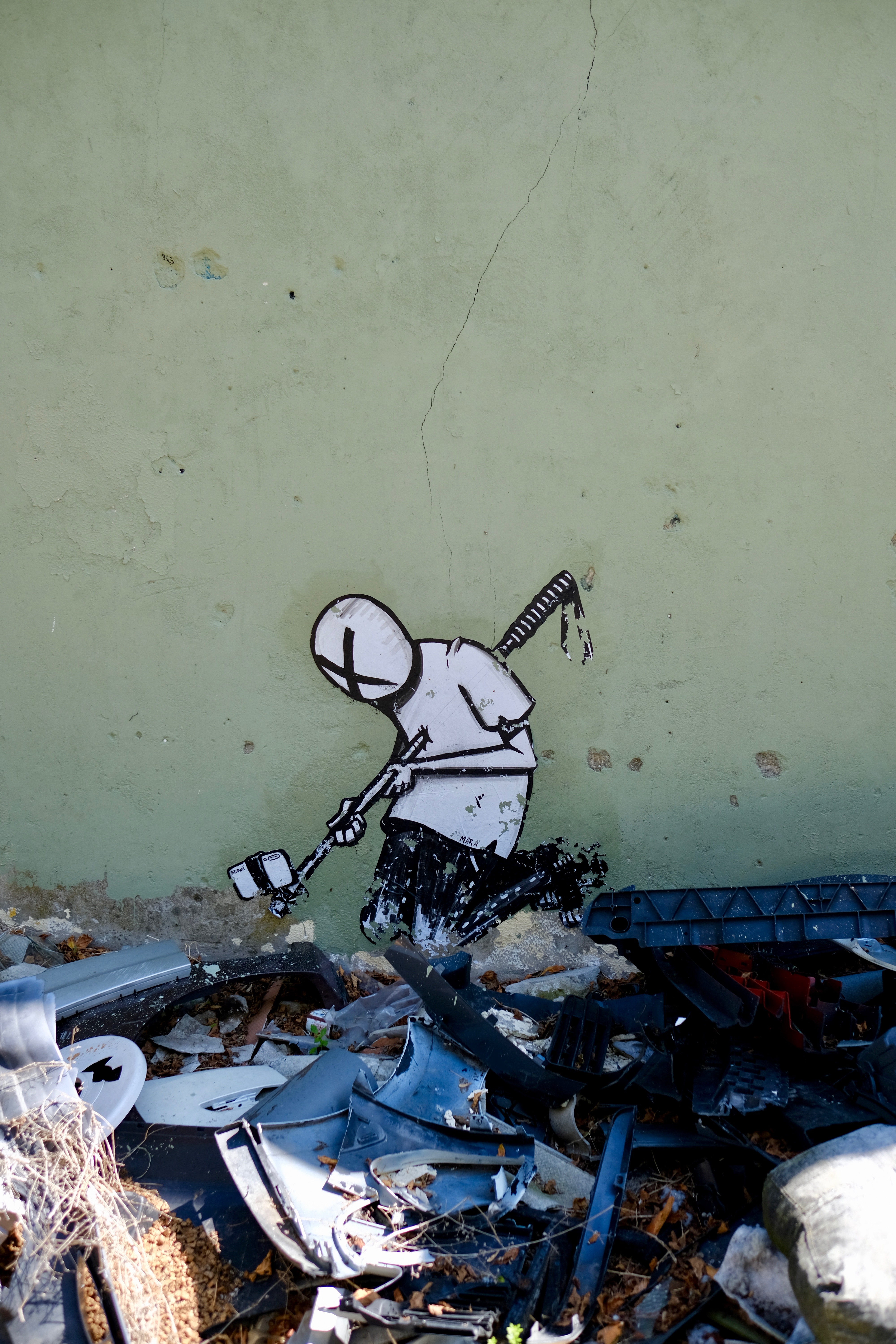
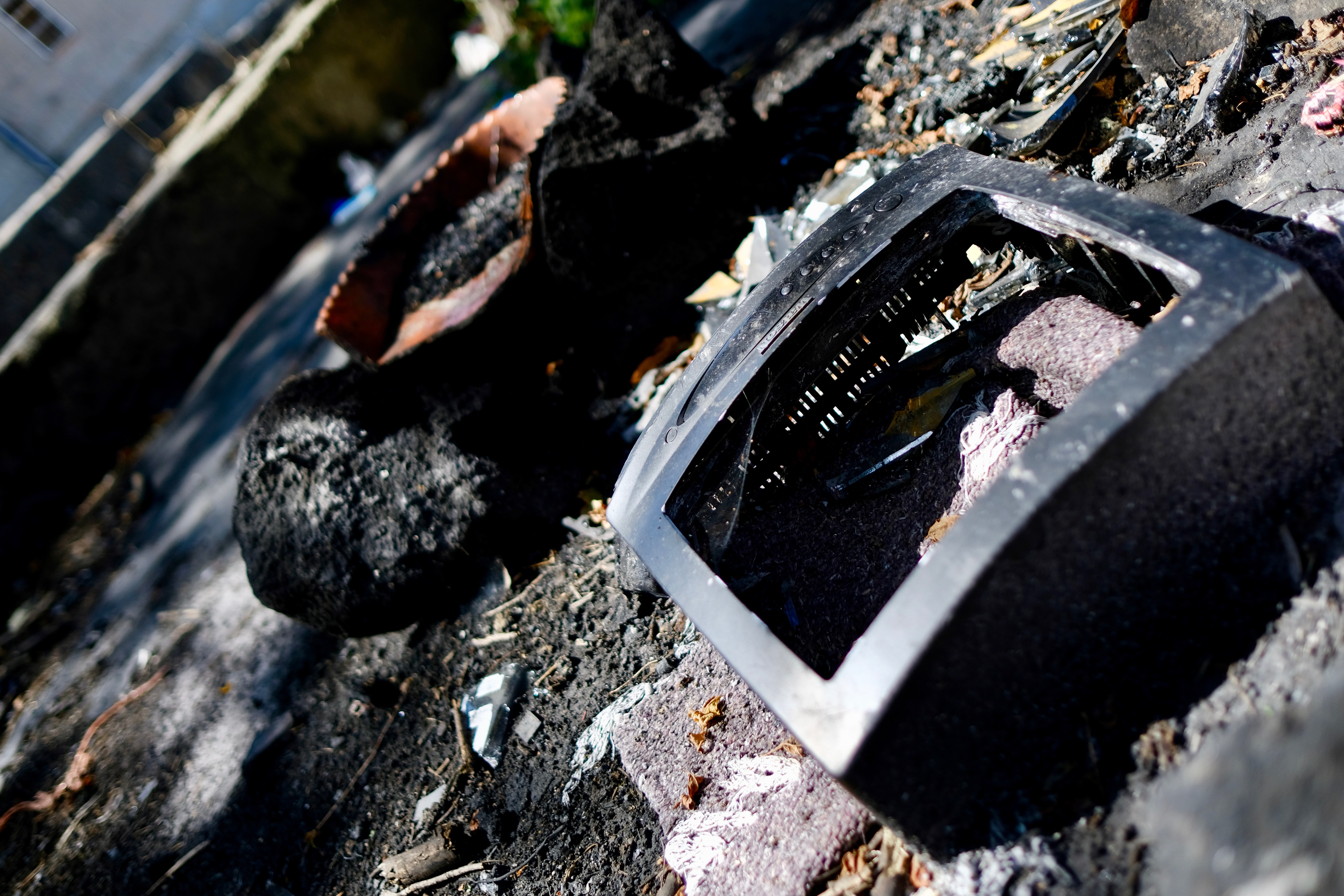
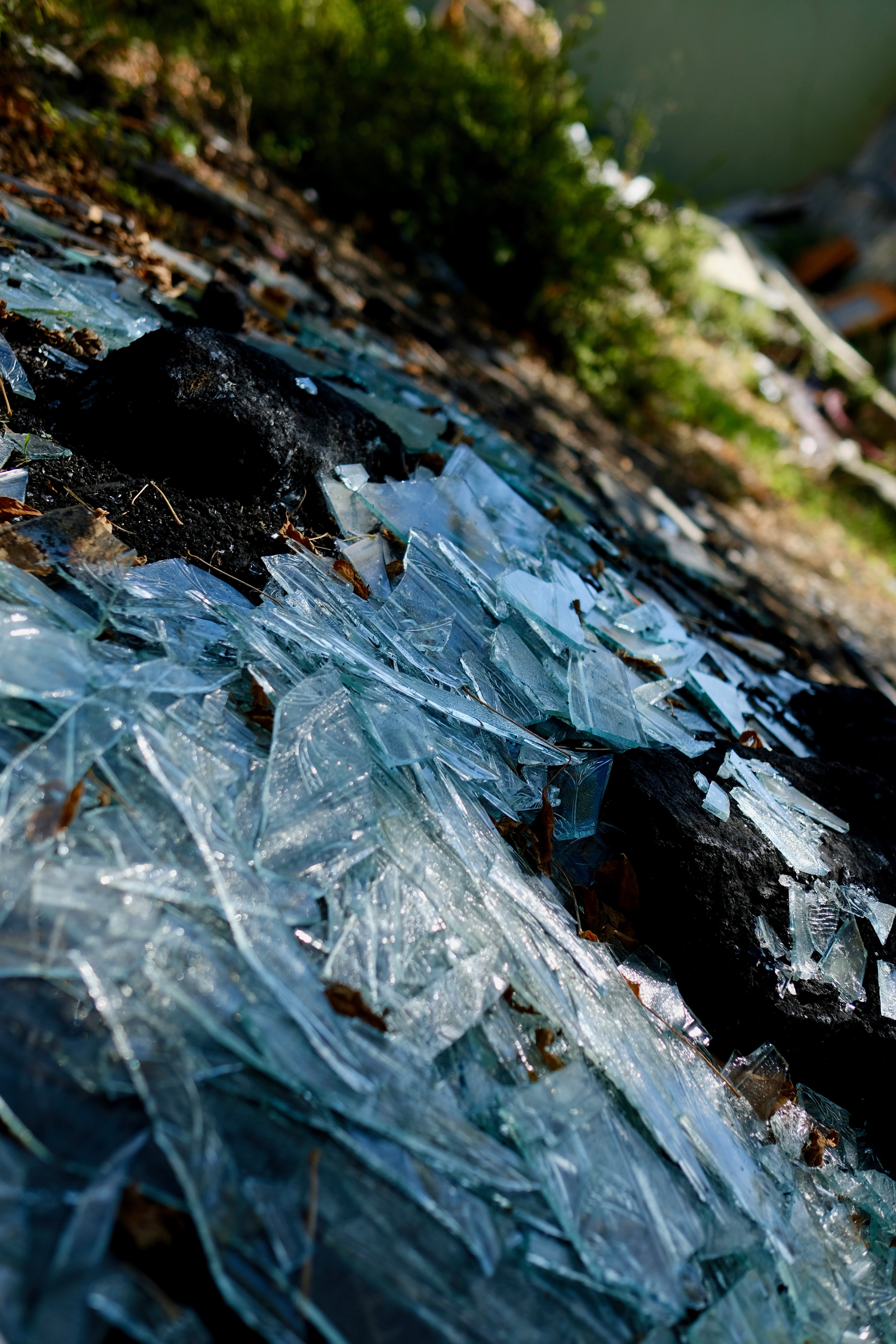
    But lucky for me, I met a wonderful German traveler in the hostel who became my Porto travel buddy. Together with two of her friends, we trudged into the underbelly of Porto. For a city of such rich history, Porto has an incredible amount of abandoned buildings. You can get whatever you want out here, it’s an all-out city garbage sale. Porto is just a giant flash sale.

    We got high quality used TV’s!

    DSCF5753

    Mosaic Glass!

    DSCF5755

    Babies!

    DSCF5758

    Real talk, the abandoned stuff is equal parts depressing and fascinating. There are little campfires strewn about, showing that drug-ridden or desperate life has, at one time or another, camped out on these grassy fields that once held many lives. People have seen better here.

    This can be seen in the many washing stations around the city. These cisterns used to operate as washing basins for laundry, but now they just sit and collect algae in their ever-flowing cleansing streams.

    DSCF5765

    As soon as I arrived, I felt that I had to head out of Porto and into my next Portuguese experience. Where could it be? I don’t know, keep reading kiddo and find out about the next adventure.
     

  • Castles & Lions in Holy Spain

    Fresh from our blue cheese and bagpipe filled jaunt through Asturias, Simon and I powered our little Baracuda West into Castilla y Leon. This is a part of Spain, I guarantee you, I knew absolutely nothing about. What I found out was that it was a place of pilgrims covered in red dust adhered with sweat, as well as a place quite rewarding for off-the-beaten-path explorers.

    We found a small inn outside the village of Hospital de Órbigo. It is quite an insignificant village, aside from a large medieval stone bridge and jousting festivals that occur every June. We were too late for the joust, so the town was quiet. Quiet sounded nice. We happily booked a cheap room for four nights and settled into the hot dusty town.

    Hospital de Órbigo is a town where everyone knows everyone and there’s almost no such thing as a tourist. An old man walks down the street with a cane in one hand and his wife wrapped in the other. He nods, buenos días, and keeps shuffling down the street where he continues to greet and shake the hands of those old friends he meets. The inn has a small restaurant attached, which seems to be the local hangout. Every morning we had breakfast here, and after the first day, we no longer needed to order. The staff seemed to work at all hours of the day and had the attitude of one who works in a cafe all day. Maybe the barman doesn’t ask for our order anymore because he has grown tired of using his tongue for 15 hours every day.

    Regardless, every morning he brought us both a large glass of coffee with frothy milk, a pulpy cup of fresh-squeezed orange, and a few pieces of toast with strawberry jam. An old man sat at the table next to us every day, not saying much but watching everything. Children talk to their elders in this town, which is the sign that you are in the country. Kids seem to talk to old people when there’s no one left to talk with. This is a small town, but it’s just what our weary bodies need.

    Our days were filled with small adventures out into the sticks of Castilla y Leon. We headed first to Las Médulas, a site of an old Roman Gold Mine. Now, all that stands are some withering Castles from the Templars and wispy whipped cream orange peaks with old Roman mine shafts.

    DSCF5693

    DSCF5731

    We stopped in a small town for coffee, a town whose name does not deserve remembering. A group of school kids sat by the fountain, giggling at the two tall white men and whispering jokes into each other’s ears. They scampered off, after realizing that we would not dig into their chicken pecking. In the table next to us, a skinny man in his 50’s sat rolling thick sticky hash into a cigarette. His hands trembled under his little joint, and he kept having to push up his round moony glasses as they fell with the sweat off his nose.

    “Don’t mind those little shits,” he says, as his thin long hair sat quietly in a ponytail on his back. “They’re just being little shitheads. Kids these days are all shitheads”. He licked his joint and raised it carefully to his mouth with a shaking claw. “Little shits…” he mutters as he lights and fills his old lungs with smoke.


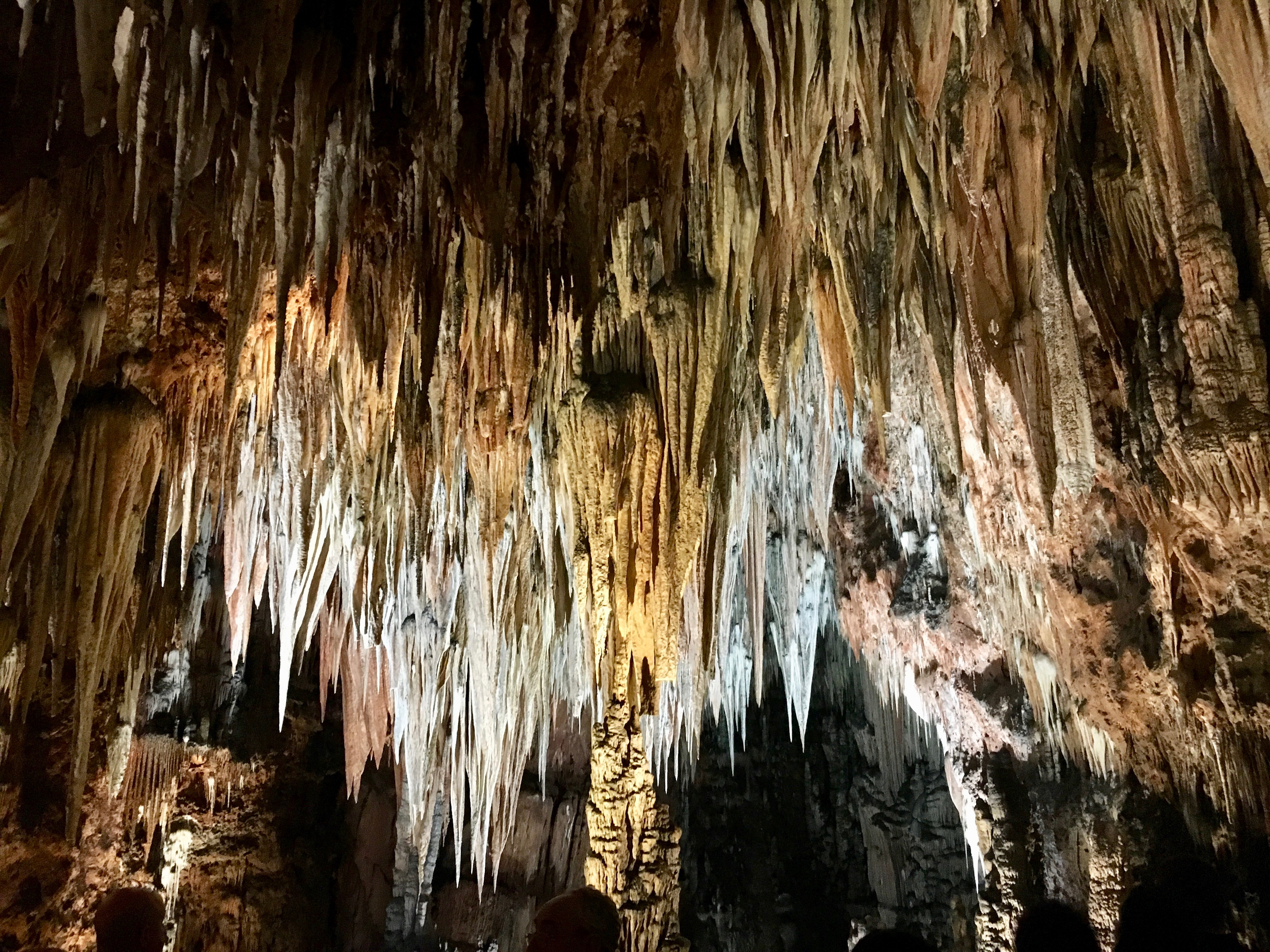
    Castilla y Leon is filled with little off-the-beaten-path nature spots. Along with Las Médulas, we made another day trip North to a gigantic cave. It looks like a cave of melting candles, with little wispy ghosts frozen in time from the centuries of minerals dripping through the caverns.

    IMG_7104.jpeg

    Our guide walked us through the cave then took us deep into the cave. It feels like a cave from The Lord of the Rings, and I feel as if goblins must be living deep in the recesses of this dripping cavern. Deeper we descended in the belly of Earth until we reach a room of candelabras. Then the guide, telling us to be quiet, shut off the lights and put us into eternal darkness the likes I never experienced. Completdarkness. The only sensation tangible were the distant drips and the scurryings of little trolls deep in the holes of the gigantic cave.

    IMG_7110.jpeg


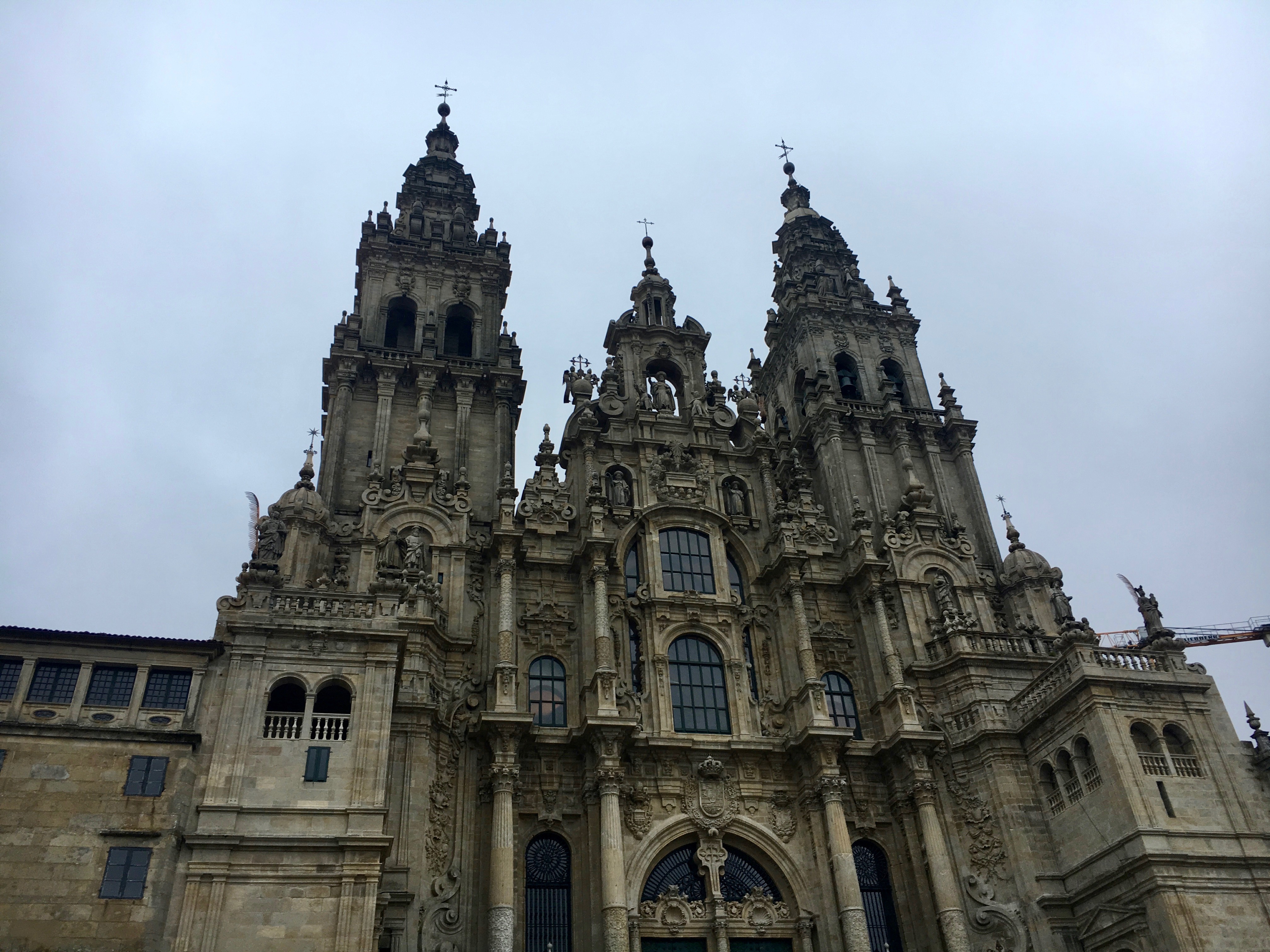
    The time had come or us to leave Castilla y Leon, and for us to enter into Galicia for the final stop on our trip. In a way, we ventured the Camino de Santiago in a more lazy fashion. Maybe one day, we’ll do it for real. But for now, we pulled our little barracuda through the Galician rain into Santiago de Compostela with fresh eyes and unweary legs.

    IMG_7113.jpeg

    Santiago de Compostela is one of the prettiest cities we’ve ventured to on this road trip. It’s steeped with high beautiful churches and filled with pale-faced pilgrims with a look of illuminating awe and serenity. They’re wet from the cold Northern rains, but their journey has ended much like ours.

    DSCF5740

    We spent the night walking through the wet cobblestones, going over our trip through our heads together one last time. It all went by too quickly, as all trips do, but at least for me, it was not over. For Simon, he would be on a flight back to the Netherlands the next day, but I would be on a bus South into another unknown.

    For me, I headed through the rain down to Vigo on the coast not far from Portugal. Here, I had a long walk around looking like a turtle with my huge IKEA bag that I’ve been carrying around since leaving for Georgia more than a year ago. The rain came down harder and I was restricted to the confines of a cafe to read my book a while. Soon though, I was picked up by my Couchsurfer, Ale. He had offered to host me for a night, which I was extremely grateful for.

    Ale is a real Galician, who grew up just across Vigo in the coastal town of Moaña. I stuff myself into his van, wet but excited for the next leg of my journey. He greeted me with a smile and began to tell me about his province while teaching me some Galician words. He was once a professional dancer, paid to travel all around the world and perform Galicia’s traditional dance in cultural events from Morocco to Japan. He’s proud of his culture, and I was ready to hear all about it. Galicians, unlike a lot of Spaniards, are descended from the Celtic tribes that dominated most of Northern Europe.

    And like all Celts, the Galicians know how to drink.

    Here, the poison of choice of Licor de Cafe, made by mixing the strong clear byproduct of wine production (like Georgian Chacha) along with coffee and some sweetener. The resulting concoction, deep brown and syrupy, is poured long into a cup with a chunk of ice and drunk in ridiculous quantities. Ale bought a bottle for us to enjoy while we talked and listen to Manu Chao, while his white cat rubbed off a kilo of long hair onto my legs.

    Galicia, like the Basque Country and Catalunya, has a strong culture and tradition all its own. It may not be as militant and defiant as its non-Spanish cousins, but it is equally fervent in its culture. Ale and I talked a lot about politics, and about immigration. In a translated paraphrase from one conversation, Ale told me that he can’t understand how “everyone in Galicia used to be immigrants to find work, but now they reject all immigrants coming here.” It is an idea I can understand, and out here in Moaña and Vigo I see almost no signs of immigration evident.

    Later that night, Ale and I headed to a bar with a set of drums and some guitars. There, we met his friends who were already deep in their Licor de Cafe. We sat outside on the balcony, listening to the rain and playing music with each other while making sure not to let our Licor de Cafe cups get too empty. Who needs to go to a concert when you can just make your own?


    My experiences in Spain have always been amazing, but being able to see the mysterious North has been a highlight of my European traveling experience throughout the years. The next day, I hopped on the bus towards Braga in Northern Portugal. This meant saying goodbye to my wonderful paradise of Spain, and hello to a new country that I have never visited. But the beautiful country and wonderful people will stay with me as a plus and will serve as a refuge when the cold of Denmark grows too unbearable in the future.
    Screen Shot 2019-08-29 at 3.33.13 PM.png

  • Through the Basque and Into Asturias

    In our last episode, Simon and I had been on the road for about three days and stayed in the middle of the misty mountains in the Basque Country. Afterward, we went South into Navarra to see the lunar plains of Las Bardenas Reales. Read more here.
    Now, it was time to move back up into the Basque Country. I had received a confirmation from a couchsurfer that we could stay with him in his small coastal town of Leiketio. I was excited to do so, as he was a huge Basque nationalist and I wanted to learn about his views on the country. But by the time we arrived and called him, the gremlins had torn down his end of the receiver and we couldn’t make contact.

    So we were left on our own.

    We headed West, along the coast to a small beach. Hear, we took a nap. Then, we decided if it could work as a napping place, it could also work as a sleeping place.

    DSCF5614.jpg

    For hours, we sat and pondered and washed our dusty skin in the cold clear waters of the Bay of Biscay.
    We headed back into town to acquire some supplies: salads, salamis, and a hefty supply of beers to make sure we would be knocked out for the night.

    Stocked with our suppliers, we hit the beach once again to find a nice spot for our little car. We were only accompanied by a couple punk youths sleeping in their van and a German couple. We were living in our own little world, drinking our beers and listening to country music. Cowboy time. Our cigarillo supplies had run dry, so I brought out the pipe and filled it with strong cherry-scented Danish tobacco. I drank a little too much and smoked a little too deep, and by the time Simon had long been snoring my head had only begun spinning.

    I removed my flannel shirt blanket and stepped into the night. I was surrounded by the cold smell of eucalyptus trees and sea breeze, spinning around with my swimming mind. The night was too cold and cloudy to see stars. In my head, I could see plenty though. I walked around, laughing to myself in pity at those who could not experience this wonderous haze I was currently entranced in.

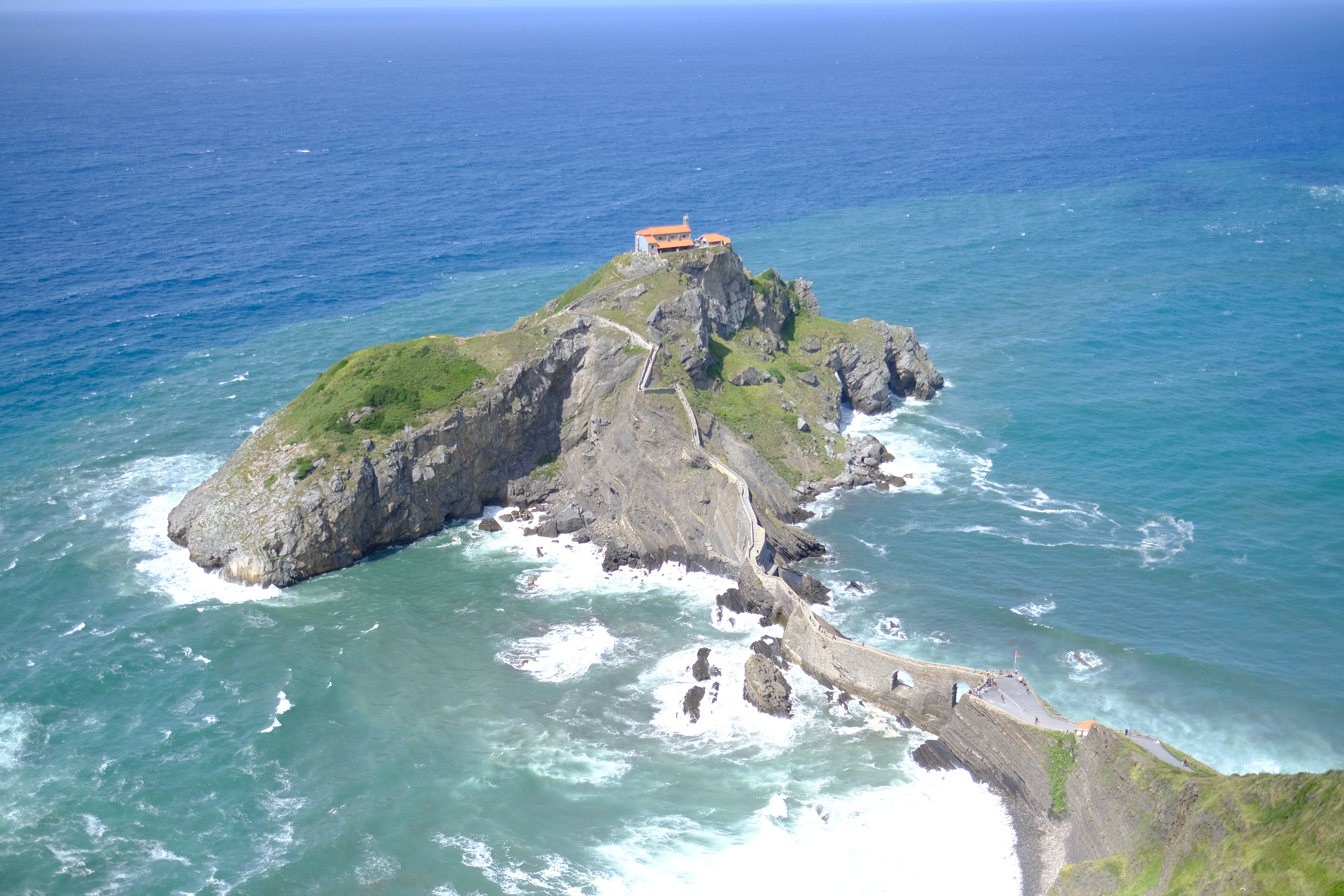
    I stumbled through my spins and went back to my flannel shirt blanket, and we woke up a bit chilled but still alive pretty late in the morning. Our next stop was Bilbao, the old industrial turned art capital of the Basque Country. But first, a stop along the coast to see some Game of Thrones coasts.

    DSCF5632.jpg

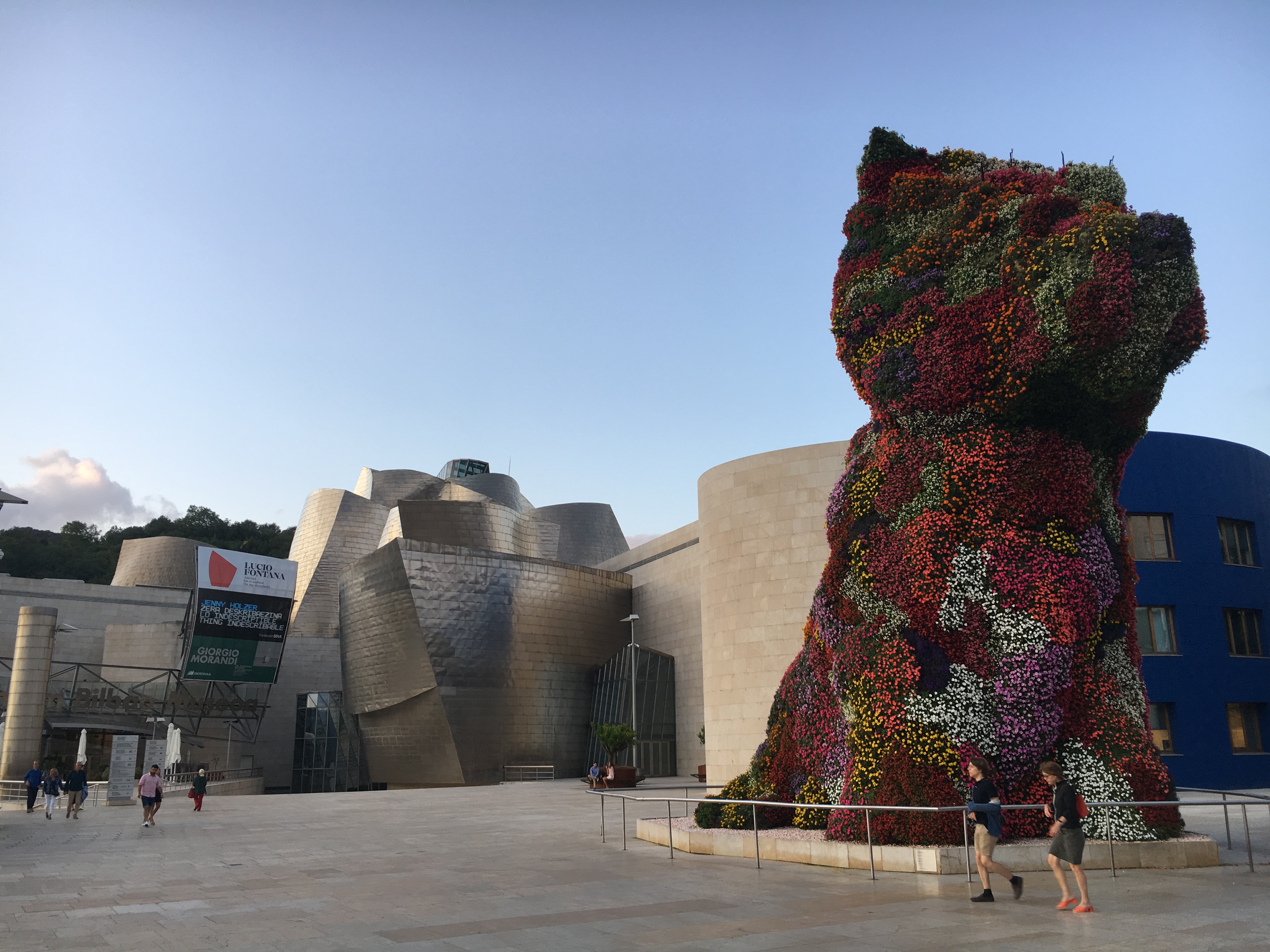
    In Bilbao, I had a lot of work to catch up on for my internship. While I was locked away on my computer for a lot of the time, we did have some free time to wander and see Frank Gehry’s enigmatic Guggenheim Art Museum.

    IMG_7065IMG_7066

    Bilbao’s a gritty city at heart, that really has struggled to shed off its soot coat. Our hostel was in a pretty sketchy part of town, and every time we went out at night we were offered whatever array of narcotics our pill-popping hearts desired. “Cocaina?” a voice would say from the shadows. “Hashish? Good Stuff!” Another would shout from the treetops.

    But down in old town, Bilbao is quite charming. We stopped for some Pintxos (Basque tapas) at a little place that had an old man grilling up spicy skewers of chicken on a corner side hibachi. Bilbao went by in a bit of a flash, I was working too hard and the city stressed me too much to fully enjoy. Leaving was a welcome pleasure.

    We continued West, out of the Basque country and into Cantabria and Asturias. We finally received some good luck from the Couchsurfing Gods, sent to us in the form of Anna. A Barcelona native, Anna grew tired of the city and moved out to the country. Here, you can rent a house for €300 a month and live in the steep hills next to the Picos de Europa. Asturias is probably one of the regions of Spain I know the least about, but it ended up being my new favorite region.

    The towns are small and living off of pastoral farm and herding communities. I can see myself settling down here.

    DSCF5637DSCF5633

    We met Anna later that night for some tapas at a local bar. The specialties here are chorizo boiled in apple cider, and a fried tortilla covered in the local blue cheese. This is the kind of blue cheese that burns your eyebrows off just by sniffing it, and I was reeking of it for a week after. The night proceeded with small beers, the typical Spanish cooler, in a small garden outside of a relaxed bar.

    DSCF5645DSCF5652

    Anna plays snare in a traditional Asturian marching band and invited us to watch her play in a neighboring village down the valley. In the summer, villages throw little parties to celebrate the season and get a bit tipsy. Asturians are pretty nationalistic, and thus love to have a traditional band blaring their bagpipes while they frothy drink glasses of their bitter apple cider.

    DSCF5664DSCF5663

    The bagpipe band plays around the city, calling everyone into the main square.

    DSCF5661DSCF5669

    Here, the village meets to get a bit tipsy and buy lucky bread from the centerpiece.

    dscf5662.jpg

    One of these bad boys sets the village back €1000, so buy up! After that, the bagpipes winge again and lead everyone to the cathedral. There, those who are religious cross themselves while those, who are not, go get crossed at the bar. We, neither religious nor alcoholics, venture up the mountain to get a better view.

    DSCF5674

    What we find is the steep sublimity of a mountain top sloughing off a mist that exits over the trees and down into the valley where the bagpipes blare. We sit for a while and eventually descend back into the town to see what is happening.

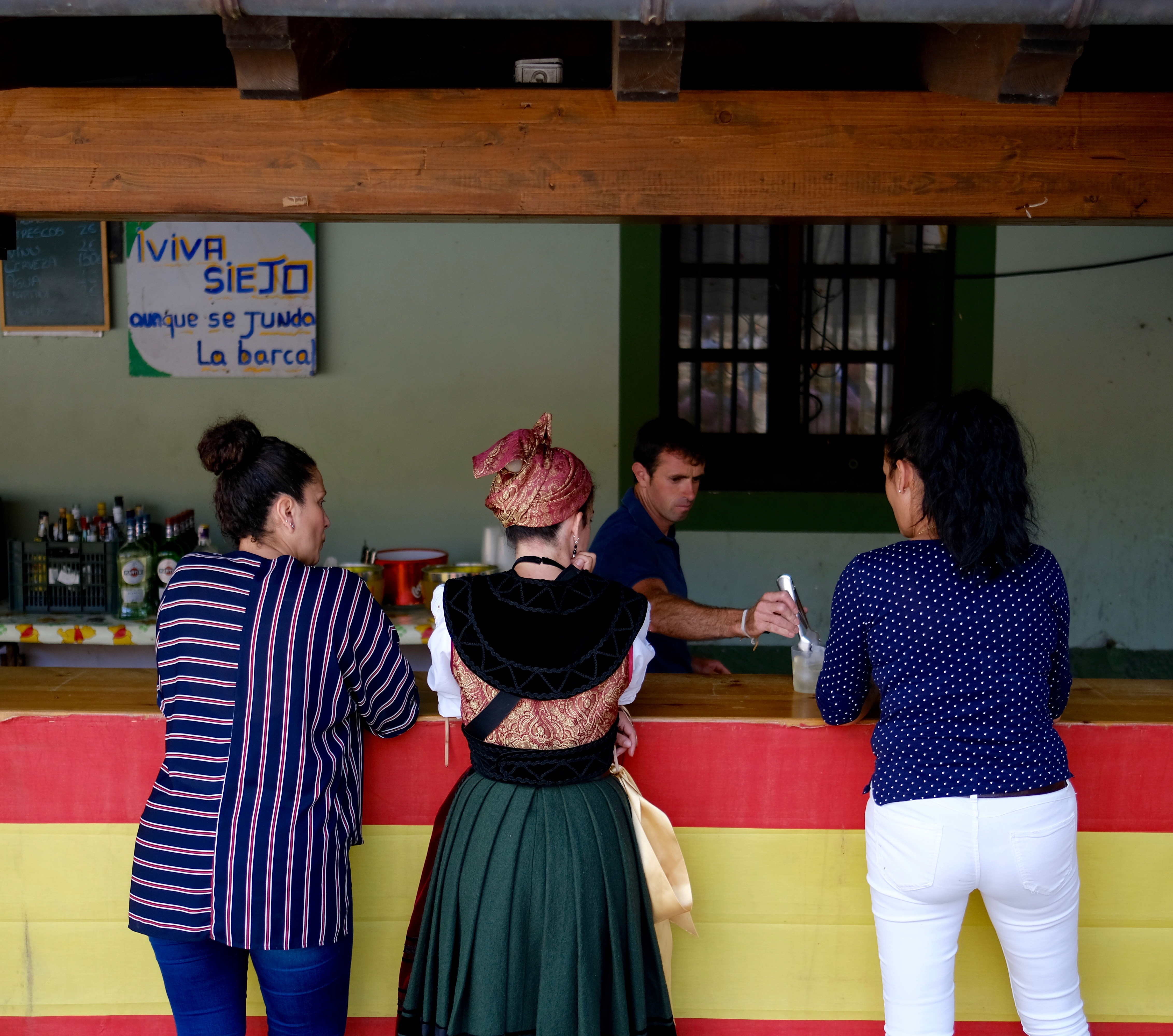
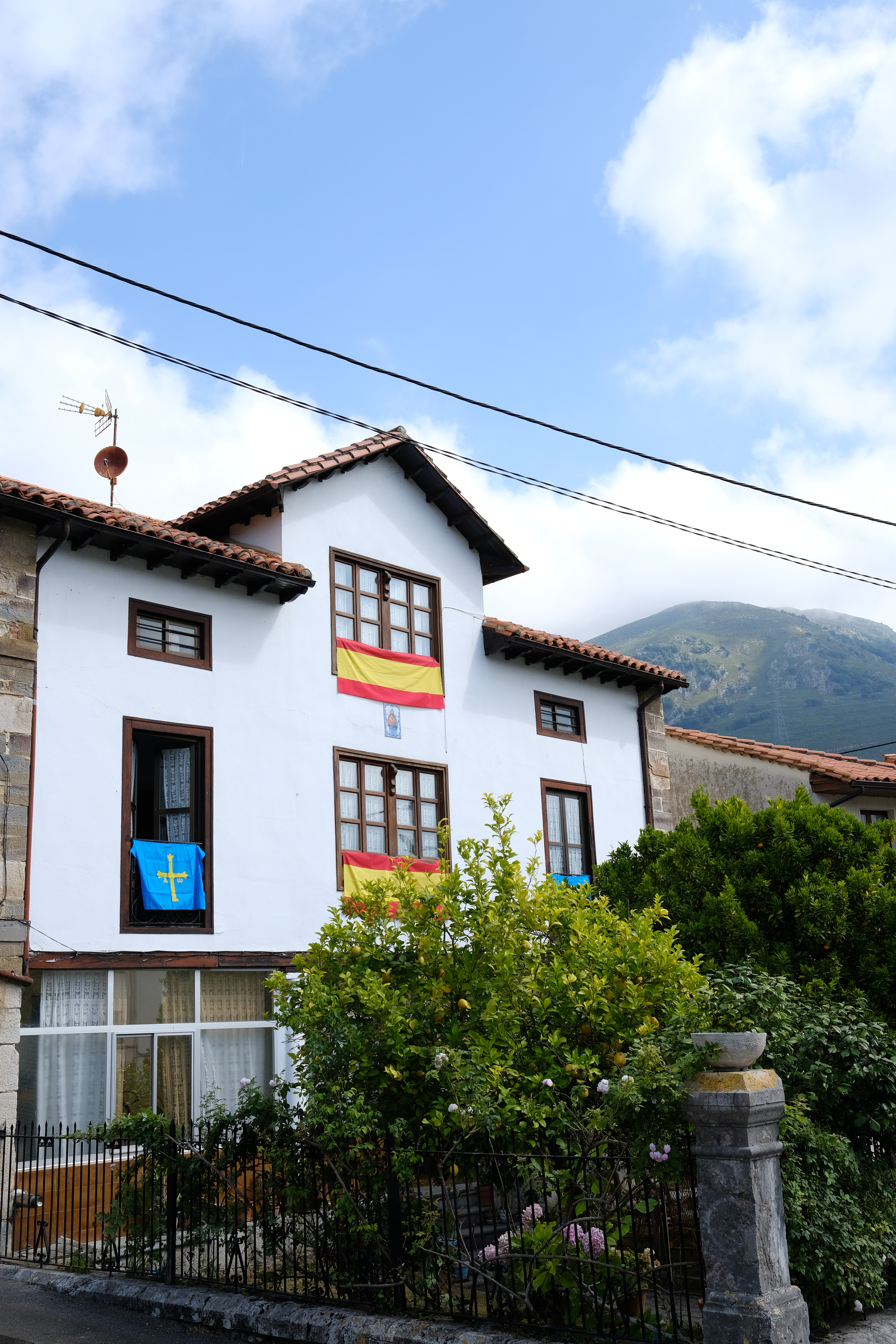
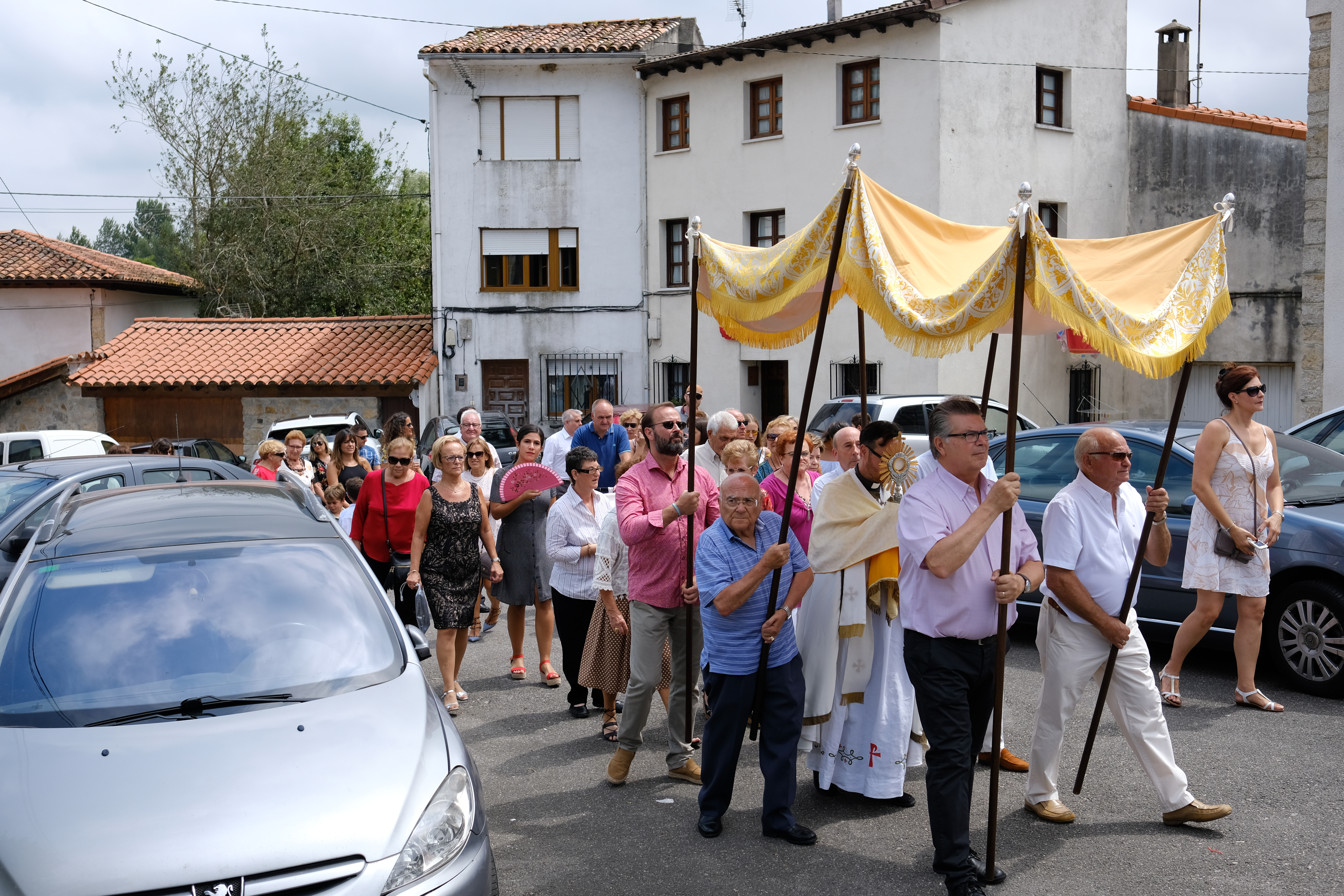
    The prayers had ended and now the bagpipes blared down the streets of the small town of Siejo. A procession of elderly Asturians carrying their holy relic through the town as the priest blesses various houses along the way follows the bagpipes until all have returned to the center for more debauchery and drinking of small beers.

    DSCF5675

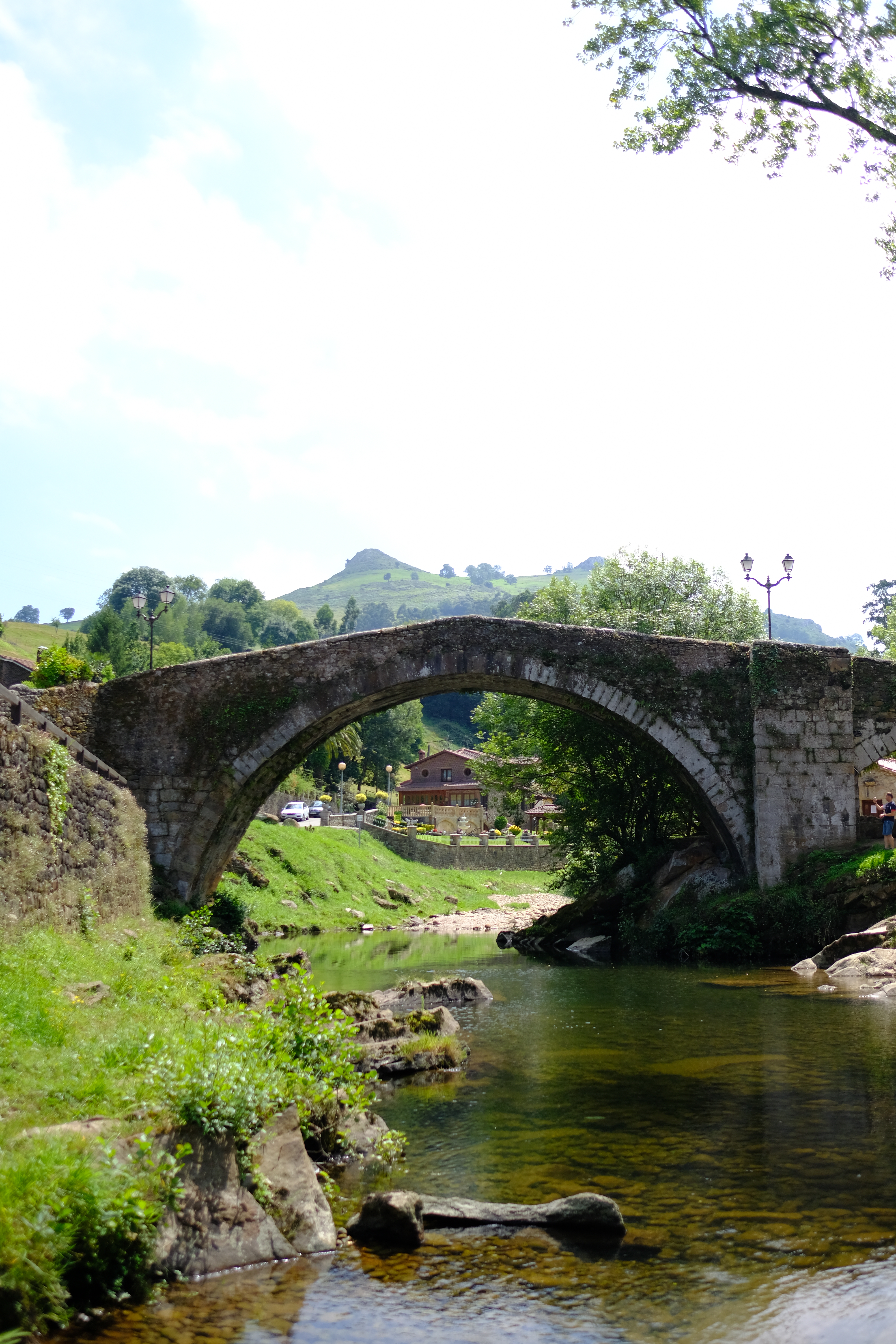
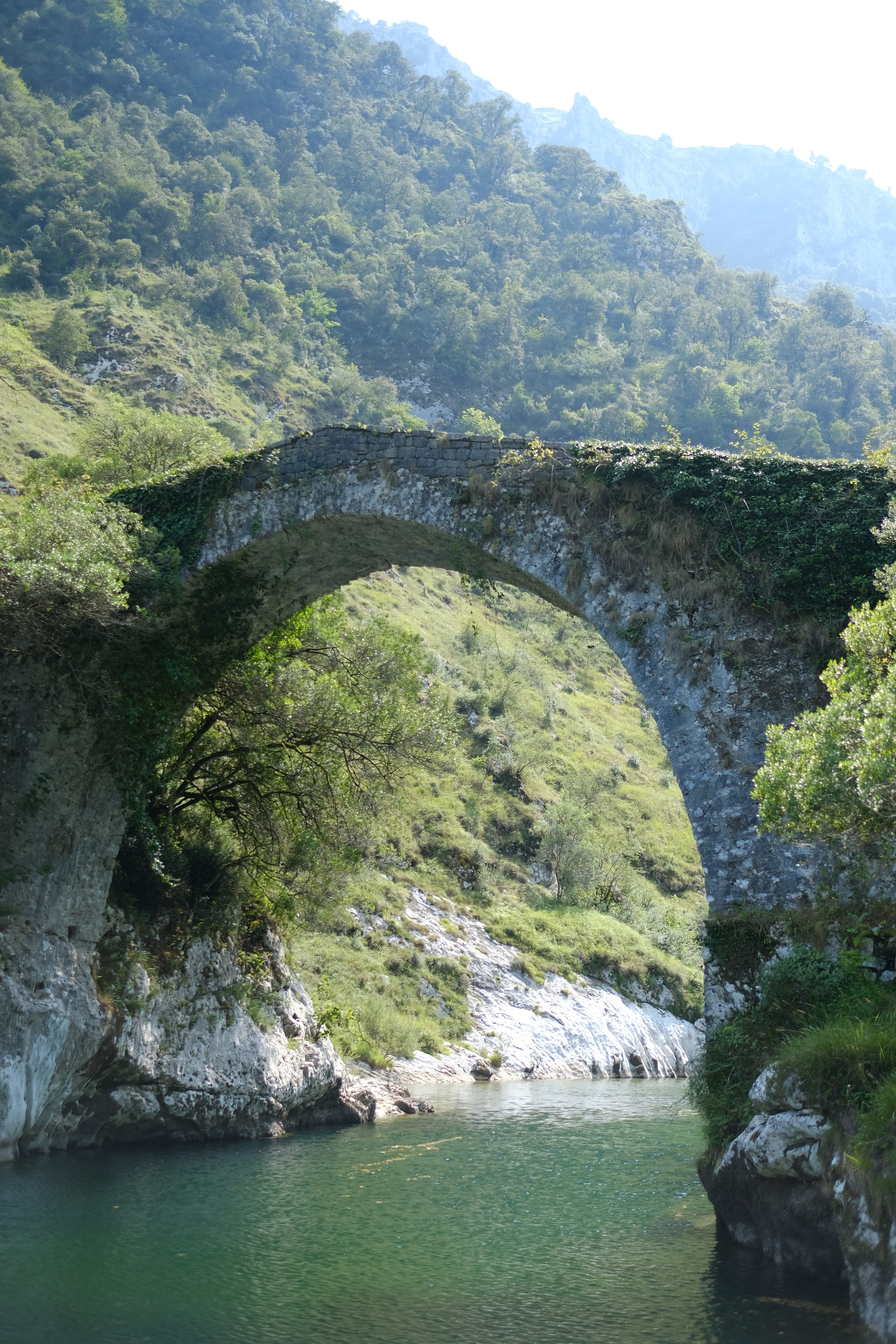
    A bagpipe man has had a bit too much cider to drink, and his bald head glows red as a warning light as his smile breaks the folds on his cheeks. Anna turns to us and fans herself with her loose sweating hand, and I can not imagine how hot she must be under the armor of several layers of traditional woolen dress. It’s all a bit too much, and as the town parties, the bagpipes and snare drums get packed up and stuffed into cars. We file ourselves in and follow Anna and her two friends to an old Medieval bridge covering a bright blue glacial river.

    DSCF5677

    Every inch of my being wants to plummet into that cold blue water, but I know that the shock of being in something so pure may hurt the impurities I hold so dearly.

    We relax more with Anna, enjoying the fresh mountain air and good company. The next morning, we hit the road and head West: back into the cowboy country of Castilla y Leon province in North-Western Spain. What lies ahead, are more deserts, Roman Gold mines, and quiet peace among the least rambled sector of Spain.


  • Misty Mountains & Lunar Deserts

    When we last met, we were spreading fast in our silver Tuna, Natalia, towards the great unknown of the Basque lands. Since moving to Europe almost four years ago, the Basque country has fascinated me in the way a toy car does to a child. Something about the rocky cliffs, the intense desire for independence, and the language that has no resemblance on this planet have made me a fan of the country for a little while. The unfortunate part of traveling to this area in the heat of summer is the tourism oozing over the French border, thus skyrocketing prices everywhere. The cheapest place we could find, two bunk beds high in the misty peaks in some remote town called Aulesti would suffice for a night of Basque immersion.

    We arrived late, in the dark of a spitting rainstorm to the little hostel high in the hills. I walked in the bar to check on the room. Many hotels here supply for Pilgrims on the Camino de Santiago and thus have restaurants and bars in the bottom of giving customers everything they could desire. I walked in and was immediately targetted as the “tall, long-haired foreigner”, which leads a barrel-chested Basque man, drunk on more bottles of wine than I could ever fit inside me, to call me out.

    “You’re so tall” He said in Basque, and then translated to Spanish once he realized my deafness towards his tongue.

    “Yes, yes, I’ve been blessed by the Gods.” I returned away from him. “Good evening, we have a reservation for-”

    “But how tall are you?” He pointed me out to his neighbors, who had obviously been listening to his antics for too long and had lost all interest. “Look how tall!” His bald head was shimmered red as his excitement heightened. “Where are from?” He said in broken English. “De donji eres?” he tried in some drunken slur of Portuguese/Spanish.

    “Estados Unidos”

    Wuaw!” He took my long, dainty witch-like guitar-playing hand in his oven mitt of a palm and squeezed it until the blood ran out. I smiled in an “I’m a tough guy too” kind of way, to which he took his meaty bludgeoning fist and pounded my chest with the strength of a falling anvil. The hit sent tremors down to my toes, but I smiled and quickly asked for the barman to give me my keys before rushing out in fear he would show me more of his farm boy strength.


    The night was long and inebriated. We flowed into our room and drank a bottle of wine before heading to a bar down the street. There we met the owner, Unai, a nice man who grew up just around the corner and had a lot to tell us about the Basque Country. He brought us some Jamon and cheese to snack on while we sipped our tiny beers and told us of his mysterious little land. While he was talking, one of his long-gone drunken friends came up to him and asked who we were. He swayed as if dancing to his own tune, grabbing hold on the back of Unai’s chair for support. I told him I was from the U.S., to which he spit in his hand and offered it to me. “Welcome!” He posited, dewey palm outstretched.

    Unai shooed him off and continued with his monologue. “The Basque Country, of course, should be independent,” he told us, with a flap of his wrist through the air as if to bash away the Spanish Republic. But of course, what would a Basque Country be without Spain and Spain without the Basque Country? I don’t know enough about the situation, so I can not say. But I can identify with the fact that this land has seen a lot of prejudice from its Castillian overlords, and desires to have its language and culture be independent on the stage of the World.


    We wished we could stay several nights high in the misty hills, but the hostel could only hold us for one night. So, we moved on to the next cheap accommodation we could find. This time, it was in the neighboring state of Navarra. But the point of a road trip is to enjoy the journey rather than the destination. Unai told us to venture to the top of the nearby mountain to get a view, which was completely obscured by the spitting rain and misty curtain. The Basque Country feels much more like a part of Scotland or Ireland than a part of Spain.

    DSCF5503DSCF5521

    All that misty fluff around Simon would probably be a steep drop off on a good day.

    With a good hike to start the day, our powder silver tuna shot down the highway to San Sebastian, a city I’ve heard too much about.

    And as is the case with many cities I’ve heard too much about, I was not overwhelmingly impressed. Yes, the streets are gorgeous and cool surfer dudes walk around downtown in wetsuits and surfboards, but the cheapest rooms available in this time of year are $100 a night and the streets are packed with people. I’ll have to come back in another season, but I was ready to keep moving down the road.

    DSCF5532.jpg

    Now we were off to Navarra, the state right below to the Basque Country. Navarra gets little International hype, other than being famous for Pamplona’s bull runs. It also receives a lot of pilgrims on the Camino, and thus has tourism from that route. Aside from that, the lunar landscape of the Bardenas Reales has drawn us South to this little state.

    To get there, we passed through steep and gorgeous cliffs and lamb filled pastures making delicious cheese.

    DSCF5607.jpg

    We finally arrived in our hostel in a little town not far from Pamplona called Lorka. The town only seems to survive as a place to house and feed wary pilgrims, thus we stood out a bit being some of the only tourists to travel by means other than dusty feet. Regardless, the town is relaxed and the beds are comfortable enough for eight euros a night.

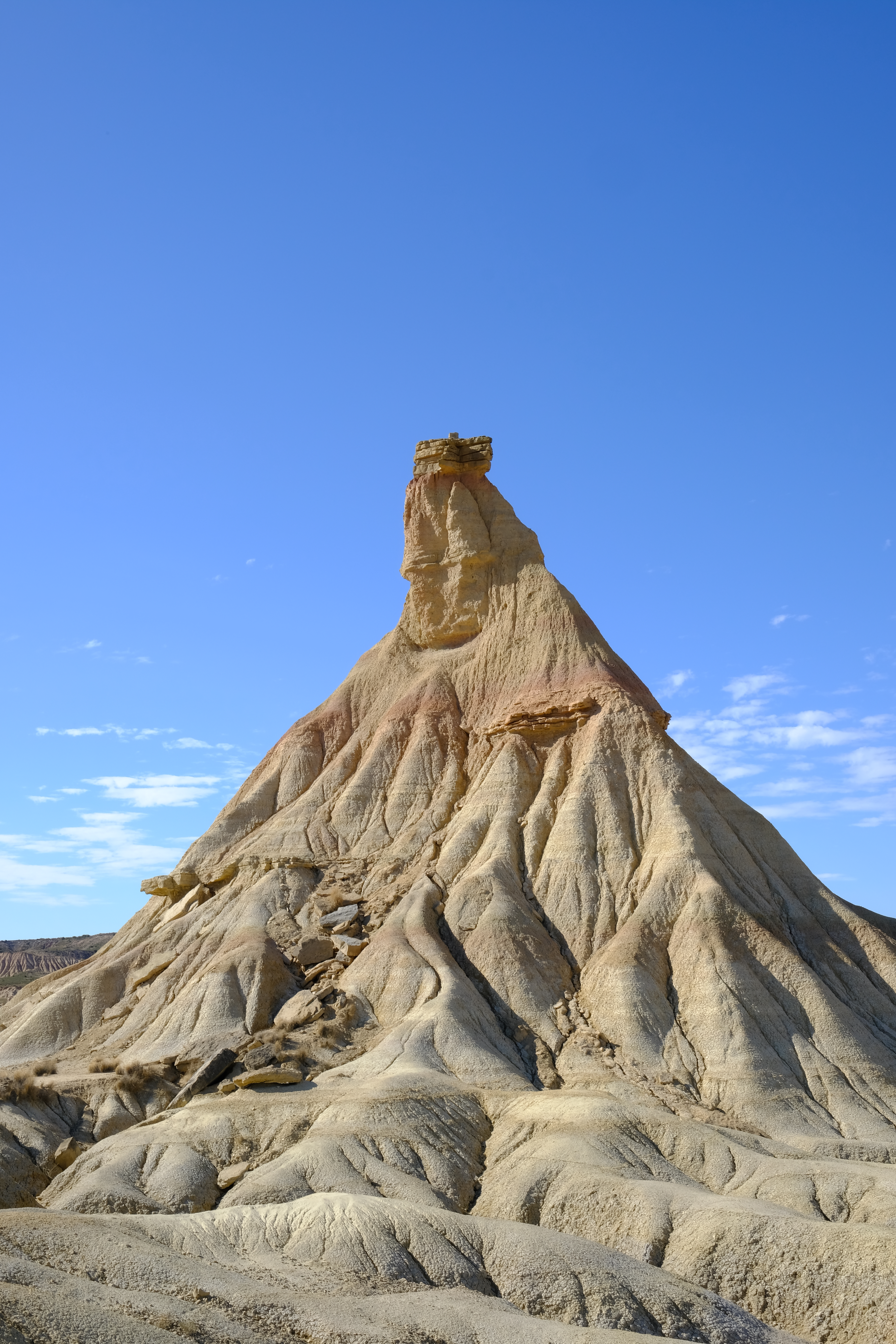
    The next morning, we plow on to Las Bardenas Reales, a National Park exuberant in its wealth of lunar-like desert landscapes. Simon being a Cowboy at heart finds this to be one of the prettiest places in Spain. I can help but feel a bit at home in this lunar weirdness, and feel as though I’m melting in a Dalí painting.

    DSCF5595DSCF5601

    That supplied enough lunar greatness for one solid day. But we kept tumbling down in our tuna, down to Tudela. It appears that every little town is having a festival at this time of year, and we’ve arrived in Tudela in the aftermath of theirs.

    DSCF5604.jpeg

    There’s leftover food, puke, used condoms, and remnants of a full days devotion to bacchanalia evaporating off the hot concrete. Everyone is dressed up in all white with red bandanas around their necks, a typical Basque get up. This is the time of year when many cities in the region, including Pamplona, let a bull loose into the city to see what havoc it creates.

    For us, it created a night with some beers and an impromptu stumble in on a punk concert in an abandoned building.

    One thing I’ve really liked about Spain so far is the amount of punk-looking kids walking around. It feels even more alternative than most other countries I’ve been in. Kids are angsty everywhere, but somehow this sunny paradise of olives and cured meats have bred some hardcore mohawks.

    We’ve only spent a few days in the lunar weirdness of Navarra, but it was already feeling like the time to head back to the misty hills of the Basque lands. The next day, we packed up our bags and road the tuna back up North to see what we could find.